
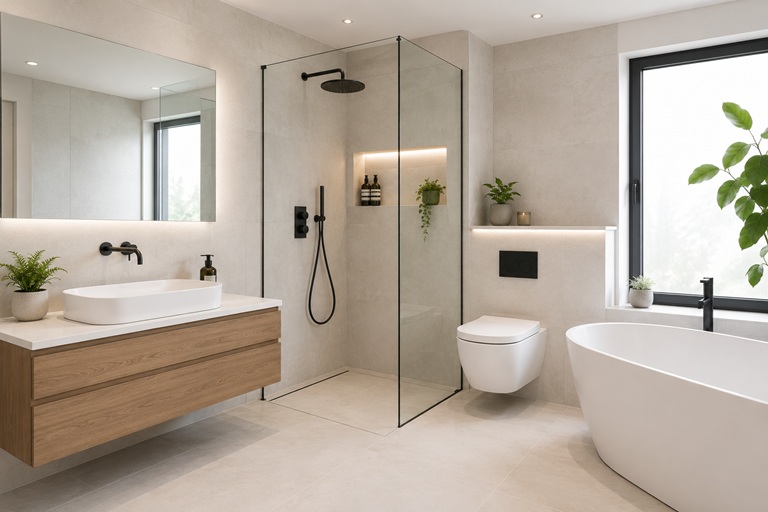
A bathroom is one of the smallest rooms in most homes, but it can contain some of the highest concentrations of labour, materials and specialist work per square metre.
That is why comparing bathroom renovation costs purely by room size is rarely useful. Two bathrooms with almost identical dimensions can have very different budgets depending on the plumbing layout, preparation required, tile choice, sanitaryware and condition of everything hidden behind the existing finishes.
Current UK guidance puts many standard bathroom renovations somewhere around £5,000–£10,000, while complicated or high-specification projects can go considerably further. In London, labour, access and the condition of older properties can push costs higher again. The important question is not simply how much you spend, but which parts of the bathroom are worth spending the money on.
The Expensive Part of a Bathroom Is Often Behind the Tiles
When people plan a new bathroom, attention naturally goes to the visible elements: the bath, taps, shower, tiles, basin and vanity unit. Those choices matter, but much of the work that determines whether the bathroom performs properly will eventually disappear from view.
A complete bathroom refurbishment may involve strip-out, plumbing, drainage, electrical work, floor and wall preparation, waterproofing, ventilation, tiling, carpentry and decoration before the final fittings are installed.
If the budget needs to be controlled, the concealed work is generally the wrong place to start cutting corners.
Spend Properly on Waterproofing and Preparation
A beautiful tile does not compensate for poor preparation underneath it. Walls need to be suitable for the intended finish, floors need to be stable, and wet areas need an appropriate waterproofing system.
This matters particularly around showers and wet-room areas, where repeated exposure to water can turn a small installation defect into damage affecting floors, walls or rooms below.
Preparation is not the glamorous part of the quote, but it is one of the areas where good workmanship has long-term value. Once expensive tiles and sanitaryware are installed, correcting defective work underneath them becomes disruptive and costly.
Changing the Plumbing Layout Can Change the Budget Quickly
Keeping a bath, toilet, shower and basin roughly where they already are can make a refurbishment more straightforward. Moving them is possible, but the effect on the budget depends on what needs to happen underneath.
Relocating a basin may be relatively simple. Moving a toilet to the opposite side of the room can involve waste pipes, floor structure and drainage falls. Creating a new walk-in shower may require alterations to the floor as well as waterproofing and drainage work.
The visible distance a fitting moves is not necessarily a good measure of how much work the change creates. Before changing a layout, it is worth understanding whether the improvement justifies what needs to happen behind the walls and below the floor.
Good Ventilation Is Worth Paying Attention To
Bathrooms generate large amounts of moisture, especially in homes where showers are used several times each day. Without effective extraction, that moisture can contribute to condensation, mould and deterioration of finishes.
A powerful-looking extractor fan is not enough on its own. The position, duct route, external termination and suitability of the installation all matter.
Ventilation may not have the visual impact of premium brassware, but it contributes far more to how well the room performs over time.
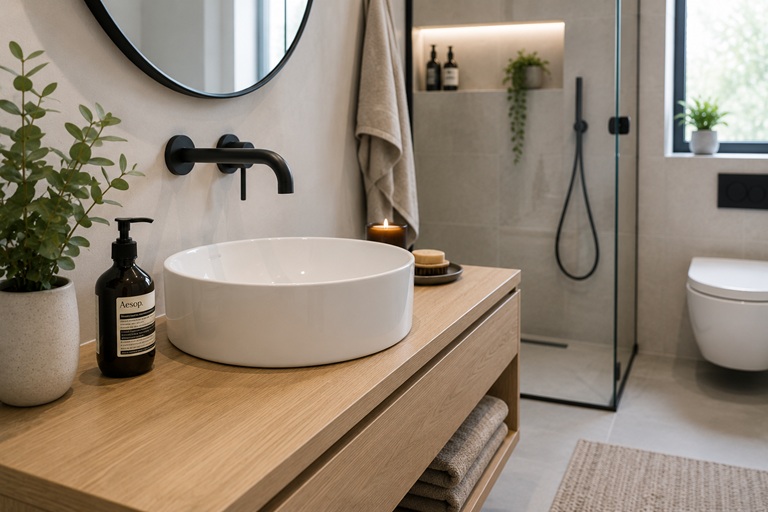
Electrical Work Needs to Be Planned Around the Finished Bathroom
Lighting, extraction, illuminated mirrors, shaver points and underfloor heating can all form part of a modern bathroom. Because water and electricity share a relatively small space, bathroom electrical work also needs to comply with the relevant safety requirements.
Make these decisions before walls and ceilings are finished. Adding a mirror light or changing the lighting layout after tiling has started is far less straightforward than planning the electrical points during the first-fix stage.
If the bathroom forms part of a larger house refurbishment, the electrical work can be coordinated with the rest of the property rather than treated as an isolated job.
Expensive Tiles Do Not Automatically Create a Better Bathroom
Tiles are an area where homeowners can spend dramatically different amounts without necessarily changing the basic performance of the room.
A well-chosen mid-range porcelain tile installed accurately on properly prepared surfaces can produce a better result than an expensive tile fitted badly.
Tile format also affects labour. Very large tiles can require more handling and preparation, while intricate patterns, mosaics and multiple niches involve more cutting and detailing.
If you want to introduce a premium material without covering every wall in it, one option is to use it selectively and keep other areas simpler. Good proportion and good installation usually matter more than covering the room in the most expensive finish available.
Sanitaryware Is an Area Where the Budget Can Run Away
There is an enormous price range between basic sanitaryware and designer products. Spending more can bring improvements in appearance, materials, mechanisms and finish quality, but not every expensive product is essential to a successful renovation.
Think about the items that receive the most use. A reliable shower system, properly installed toilet mechanism and good-quality taps may deserve more attention than an expensive accessory that performs no better than a simpler alternative.
Before buying concealed taps or specialist fittings, also consider future maintenance. Components hidden inside walls should be properly installed and reasonably accessible where servicing may eventually be required.
Custom Storage Can Be Worth More Than Another Luxury Finish
Bathrooms often become frustrating because nowhere has been planned for towels, toiletries, cleaning products and everyday items.
A good vanity unit, recessed cabinet or carefully planned storage can make a relatively compact bathroom work much better. In awkward London properties, standard furniture does not always make efficient use of the available space.
If the room has unusual dimensions or redundant corners, investing in practical storage may add more everyday value than spending the same amount upgrading purely decorative finishes.
Flooring Costs Depend on What Is Underneath
The finished bathroom floor may cover only a few square metres, but replacing it can reveal much more work than expected.
Old tiles may be hiding an uneven substrate, movement or previous water damage. In some properties, sections of the subfloor need attention before the new finish can be installed.
Right Build also provides flooring services in London, including preparation where the existing floor needs to be brought to a suitable condition before the chosen finish goes down.
Older London Bathrooms Can Reveal Extra Work During Strip-Out
Older bathrooms sometimes contain several generations of alterations. New tiles may have been installed over older finishes, pipework may have been changed at different times and previous leaks may have been repaired cosmetically rather than properly.
Once the old bathroom is stripped out, builders can get a much clearer picture of the floor, walls and services.
This is why a sensible renovation budget should contain some contingency. You do not want every pound committed to visible fittings before you know what condition the room is actually in underneath.
Where Can You Control the Bathroom Budget?
Controlling the budget does not have to mean choosing the cheapest option for everything. It is usually more effective to simplify decisions that create additional labour without compromising the underlying construction.
- Retain the existing layout where moving plumbing provides little practical benefit.
- Use premium finishes selectively instead of specifying them across every surface.
- Choose standard-size fittings where bespoke items add cost without improving the room substantially.
- Make decisions before work starts so plumbing and electrical positions are not repeatedly changed.
- Protect the budget for preparation and installation rather than spending everything on visible products.
Compare Bathroom Quotes by Scope, Not Just Price
One bathroom quote may include strip-out, waste removal, preparation, plumbing, electrics, waterproofing, tiling and decoration. Another may show a much lower figure because several of those stages have not been included.
Before deciding that one contractor is expensive, make sure the quotations describe the same work. Check who is supplying sanitaryware and tiles, whether preparation is included and what happens if defects are discovered after strip-out.
Choosing experienced builders in London for a bathroom project should involve understanding the proposed installation, not simply selecting the lowest number.
Final Thoughts
The best bathroom budgets are not necessarily the biggest. They put the money into the areas that are difficult to correct later: plumbing, waterproofing, preparation, ventilation, electrics and good installation.
Tiles, taps and furniture still shape how the room looks, but they should sit on top of work that has been properly planned and built. A bathroom that performs well for years is better value than one that looks expensive on completion day but hides shortcuts underneath.
If you are planning a bathroom renovation, contact Right Build Group to arrange a free site survey and discuss the layout, condition and scope of work before finalising your budget.