
RIGHT BUILD GROUP · STREATHAM
Bathroom Refurbishment in Streatham
A useful bath can stay while the shower above it is rebuilt. Assess the rim, wall junction, screen and controls together before ordering the replacement fittings.
- Retained bath assessed
- Screen and controls coordinated
- Wet-area junctions reviewed
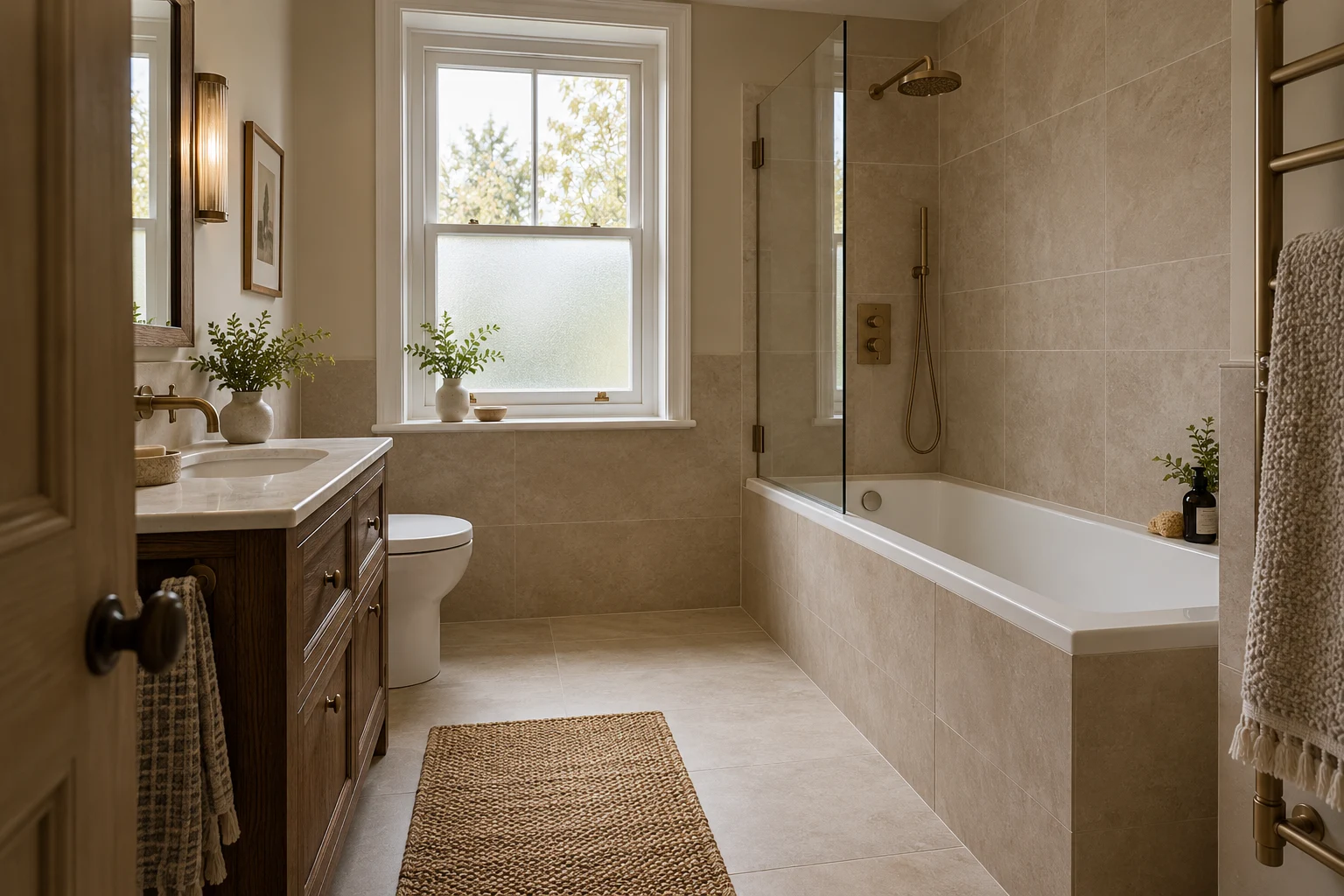
A ROOM YOU USE EVERY DAY
Keep the bath only if the shower can work with it
If you still use the bath, replacing the shower area need not begin with removing every fitting. The important question is whether the existing bath provides a sound and practical base for the proposed arrangement. Its shape, condition, position against the walls and access beneath it all matter before a new screen or valve is chosen.
Right Build Group offers bathroom refurbishment in Streatham, including shower installation, plumbing, preparation and tiling. Describe what you want to improve above the bath and why the bath remains useful. The survey can consider that combined brief rather than treating the screen, tiles and taps as unrelated replacements.
CHOOSE THE RIGHT SCOPE
Choose the right scope around the retained bath
Renew the shower surround
The wall finishes and underlying wet-area construction can be assessed while the bath is proposed for retention. Establish which fittings or edges need removal to prepare the area properly. Keeping the bath does not prove the existing wall junction or concealed background is suitable for a new finish.
Change the screen and controls
A different screen or valve may improve daily use, but review their requirements with the actual bath shape and wall. Consider entry, pivot movement and the route to the controls. A replacement described by its width alone does not establish a workable assembly.
Compare replacing the bath as well
If assessment finds damage, an unsuitable edge or a position that obstructs the proposed shower arrangement, compare the wider work before committing to retention. That decision should follow condition and practical use rather than a rule that a partial job must keep every existing fitting.
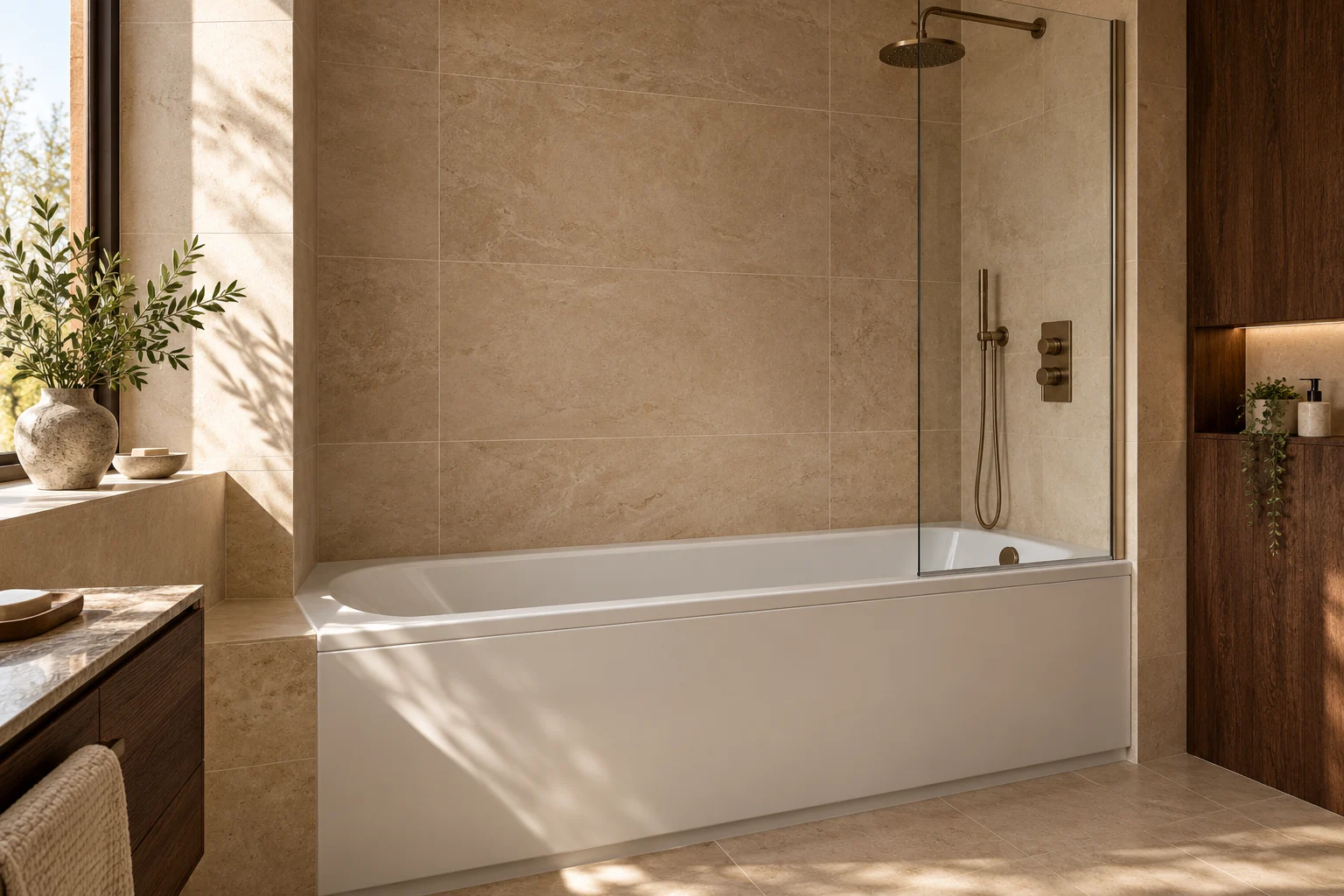
LAYOUT BEFORE FINISHES
Follow the water to the bath edge
Look at how the screen meets the bath and adjacent wall, especially where the rim changes shape. Show any point where water escapes during ordinary showering. A new screen should be assessed against that geometry and its product requirements, not selected simply to cover more of the opening.
Open the proposed screen on the layout and consider its pivot as well as its closed position. Check the relationship with the basin, taps and the space used to enter or clean the bath. The screen may appear to fit when closed while its movement conflicts with the rest of the room.
Consider reaching the shower controls without an awkward stretch across the bath or through the spray. Their practical position needs to be reviewed with the supply and concealed installation. Keep the bath’s ordinary use in the same discussion: a better shower should not leave taps, the waste control or the route into the bath inconvenient.
WHAT HAPPENS, AND WHEN
Assess the bath before fixing the new shower detail
An over-bath shower depends on several interfaces meeting correctly. The decisions below keep the retained fitting, new wall work and product choices connected throughout the proposal.
| Stage | What happens | Your decision point |
|---|---|---|
| Check the retained bath | Review visible condition, rim shape, position and access beneath it. | Explain why it should stay and identify any concern before ordering. |
| Coordinate shower products | Assess screen movement, valve requirements and control positions. | Confirm a complete arrangement suited to the bath and wall. |
| Remove and examine | Open the agreed surround and inspect exposed background material. | Review damage or unsuitable junctions before new protection covers them. |
| Rebuild and fit | Complete specified plumbing, wet-area preparation, tiling and installation. | Keep screen fixing and bath-edge details consistent with the selected system. |
| Review both uses | Check bathing, shower operation, maintenance access and finishing. | Understand product care and how relevant parts remain reachable. |
THE TECHNICAL DETAILS
The bath edge is part of the shower installation
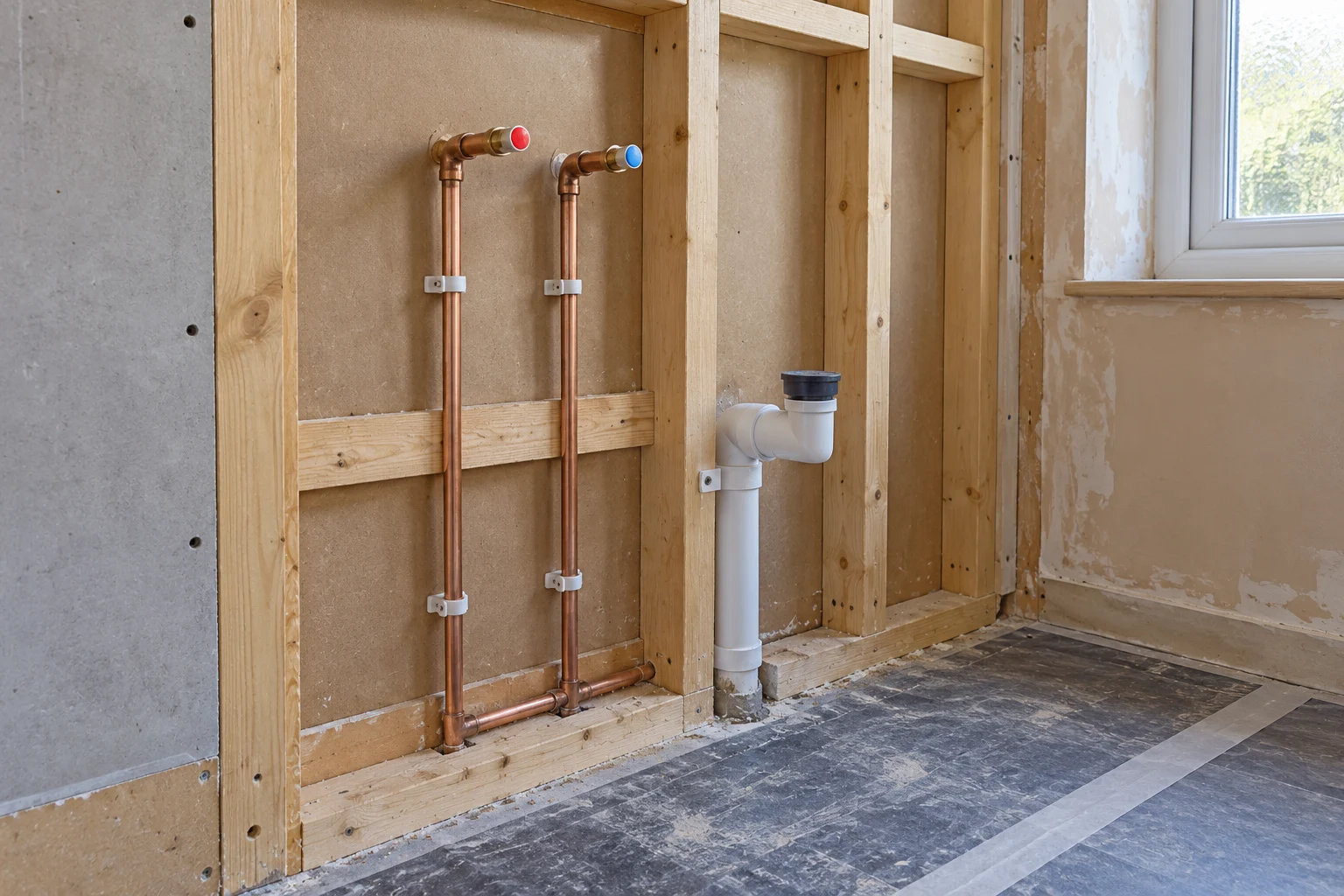
Keep the bath waste and shower services maintainable
Review how the retained bath fills and drains as well as the proposed shower supply. The new valve and outlet must suit the available water arrangement. Share product details before purchasing, particularly where a concealed control needs work behind the existing surround.
Ask how the bath waste, trap and relevant connections will be reached after completion. If a new panel, tiled face or nearby unit is proposed, consider its removal and the space behind it. A screen improvement should not result in closing the practical route to an existing service point.
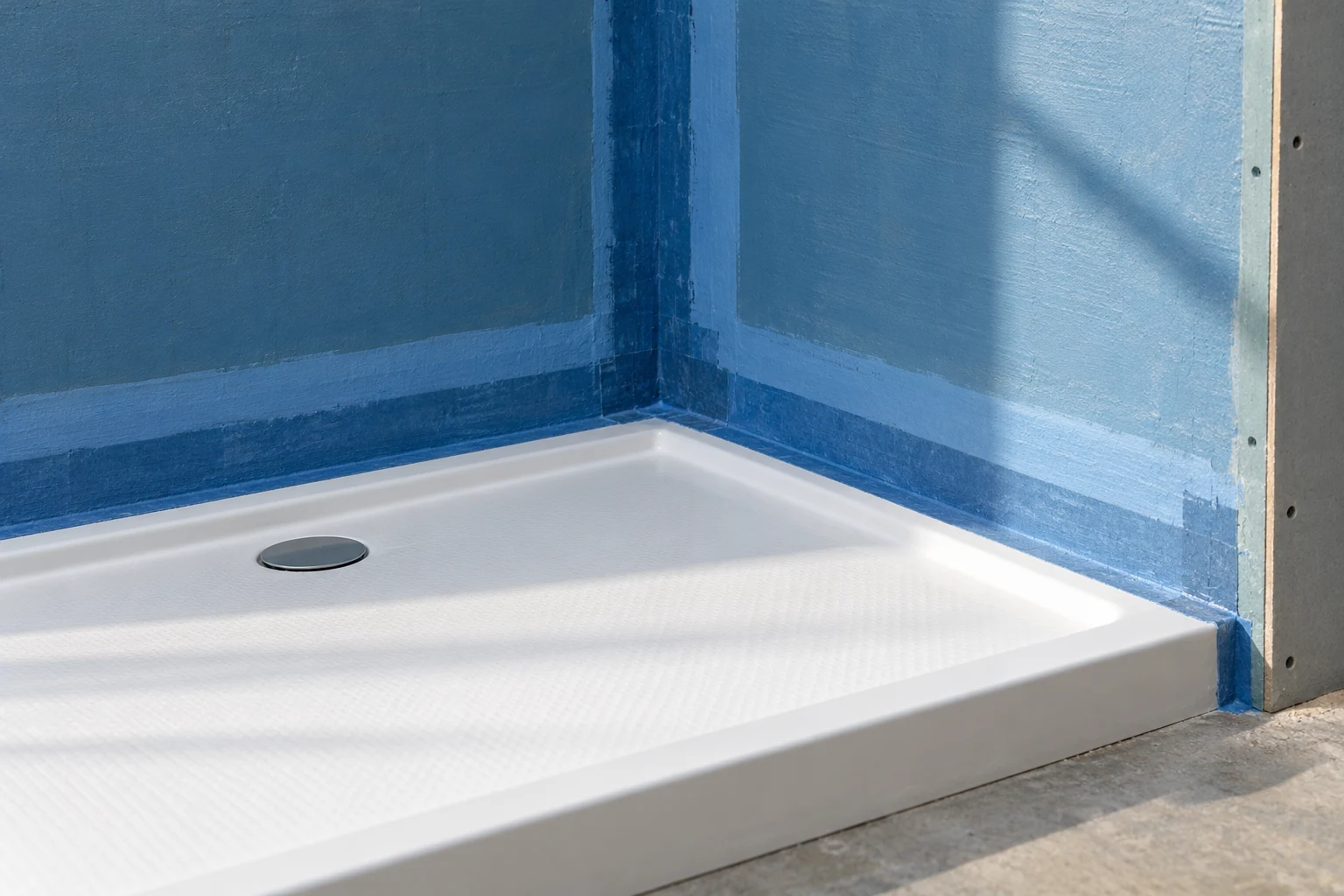
Resolve the wall-to-bath junction before tiling
The relationship between the retained rim, prepared wall and selected waterproofing system needs assessment. New tiles and ordinary grout do not establish that detail by themselves. Discuss the junction and penetrations as part of the shower area rather than leaving the bath edge as a final cosmetic line.
If old material is damp, loose or damaged, review the cause and required repair before covering it. Bath retention should not force an unsuitable boundary for the new wet-area work. Follow the chosen system’s preparation and drying requirements, including its relationship with the bath and surrounding construction.
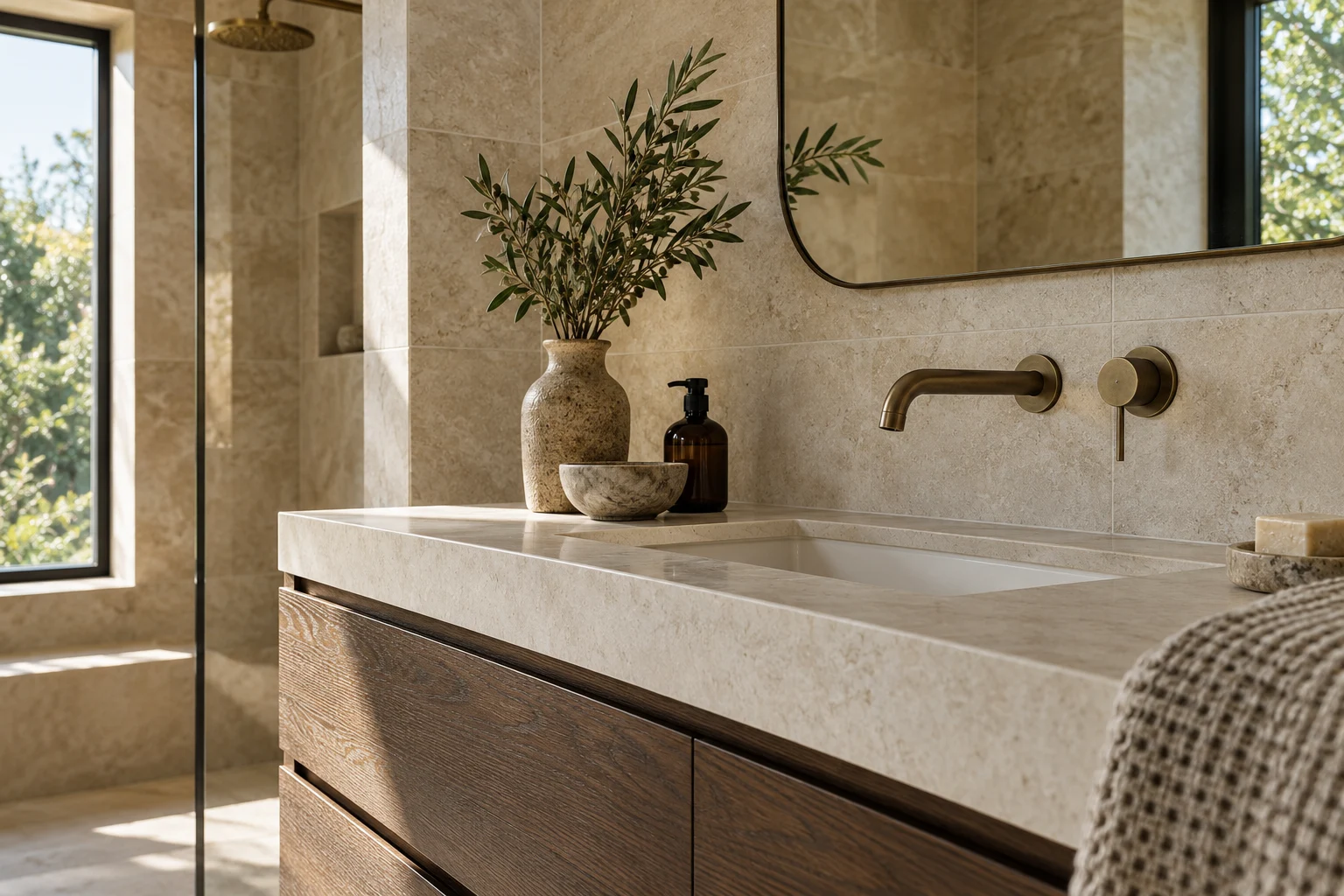
Set out tiles around the screen and controls
Plan visible cuts, exposed edges and fittings against the actual bath position. A wall or rim that differs from the product photograph can affect the result. The setting-out should also take account of the screen’s fixing requirements, which need review before the surface is finished.
Consider how new tiling ends beyond the shower area and meets retained finishes. A deliberate transition may be more useful than a narrow patch that cannot be matched. Keep screen and surface care information together, and discuss cleaning access around the bath end as well as the appearance of the main wall.
AIR, LIGHT & EVERYDAY COMFORT
An improved shower still needs moisture removal
Explain how frequently the over-bath shower is used and any condensation you notice after it. Review the fan, duct route and discharge before finishing the surround or ceiling. Replacing a screen can change visible splashes, but it is not an answer to the room’s extraction requirements.
Lighting, heated mirrors and towel rails need suitable specification and positions assessed by the appropriate electrician. If accessories or switches are being changed near the bathing arrangement, share those choices before finishes are fixed. Keep the electrical brief coordinated with the actual bath and shower layout.
PLANNING THE WORK IN STREATHAM
Prepare the over-bath shower brief for Streatham
Photograph the whole bath, including both ends, its panel and the adjoining wall. Show the screen open and closed if it is safe to do so. These views help explain whether the difficulty is entry, movement, splashing or reaching the controls rather than presenting a screen width as the entire brief.
Note when water appears outside the bath and where you first see it. Distinguish shower use from filling or draining the bath without attempting a diagnosis. Keep any previous repair information available so a returned symptom is not treated as a new colour or seal preference.
Find the bath or screen reference if you already have it, and identify the access panel you know about without dismantling it. Say whether another bathroom is available during the surround work. Retaining the bath does not mean it can remain in normal use throughout preparation and installation.
WORKING WITH RIGHT BUILD GROUP
Keep the bath and shower in one assessed proposal
Describe what needs to improve
Share photographs, splashing or access concerns and the reason for keeping the bath. Include the existing product information you have and any replacement ideas.
Assess retention and compatibility
At the survey, review bath condition, waste access, wall junctions and proposed products. Agree the written scope and responsibilities for supplying the screen and controls.
Review the exposed surround
Discuss background damage or a changed junction before finishing proceeds. If the bath cannot reasonably remain within the assessed proposal, compare the revised work before purchase.
Review bathing and showering
At handover, check screen movement, controls, finishing and maintenance access. Keep instructions for the fitted products and ask about care at the renewed junctions.
BUILDING A USEFUL QUOTATION
Price the rebuilt shower area, not the screen alone
Keeping a suitable bath can avoid replacing a useful fitting, but the surround still needs appropriate preparation and wet-area construction. Compare the complete work, including removal, plumbing changes and finish boundaries, rather than treating the price of a screen as the cost of the improvement.
The bath’s condition and access can affect the scope. Panel removal, waste attention or damage revealed behind the surround may require work separate from the intended new finish. Ask how such findings would be assessed and agreed, while keeping optional changes distinct from necessary repairs.
Before confirming the work, check the selected screen and controls against the retained bath and the wet-area detail. Clarify whether the quotation includes removing and reinstating a bath panel, renewing affected wall finishes and making good around changed fittings. Keep delivery information for the full shower set with the scope. If assessment shows the bath is unsuitable for retention, compare the revised work before purchasing products that depend on it staying.
BEFORE YOU COMMIT
Questions worth asking.
Can I keep my bath and replace the shower above it?
It is worth assessing the bath’s condition, shape and wall relationship before committing. The proposed screen, controls and wet-area work need to suit that retained installation rather than assuming every bath accepts the same replacement.
Is screen width enough to choose a replacement?
No. Review the bath rim, wall fixing and pivot movement as well as the closed width. Include the basin, taps and cleaning access so the product is considered in use, not only against an opening measurement.
Will a new screen stop water outside the bath?
That depends on the cause and arrangement. Describe when and where water appears. The screen, shower position and junctions need assessment rather than assuming a larger panel resolves every escape route.
Can the bath waste be tiled in for a cleaner appearance?
Discuss relevant maintenance access before finishing the panel or face. The waste, trap and connections may need a reachable route, and an attractive continuous surface should not close the agreed access.
Do new tiles make the bath-to-wall edge waterproof?
The underlying specification and junction detail need assessment with the retained rim and selected system. Tiles and ordinary grout alone do not establish a sound wet-area construction or resolve an old failed edge.
Can we use the bath while its shower area is renewed?
Agree room availability for the actual stages. Removal, service work, preparation and drying can limit use even if the bath remains in position. Plan alternatives before relying on it during the refit.
BATHROOM SERVICES BEYOND STREATHAM
Considering work at another property?
Explore our bathroom services in Battersea, Clapham and Tooting, or see the main service page for the wider installation scope.
LET’S PLAN YOUR BATHROOM
Improve the shower without guessing about the bath
Arrange a Streatham survey and no-obligation quotation with Right Build Group. Bring photographs of the bath, surround and screen, plus the difficulties you want the new arrangement to resolve.