
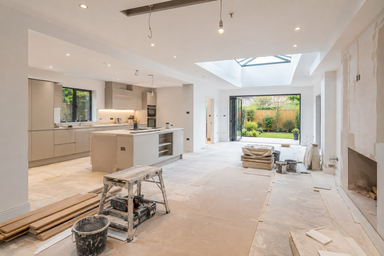
Planning a house renovation in London usually starts with a number. Homeowners want to know whether the project is a £40,000 job, a £100,000 job or something much larger before they commit to drawings, materials and a construction programme.
The problem is that the headline renovation figure is often the least useful part of the conversation. Two houses with the same floor area can require completely different budgets once the structure, services, kitchens, bathrooms and finish level are taken into account.
As a broad current UK benchmark, the renovation of an average three-bedroom house can fall anywhere from roughly £43,500 to £110,000. A substantial London refurbishment can exceed that range. The more useful question is therefore: where is the money actually going?
Start With the Scope, Not a Price Per Square Metre
Price-per-square-metre figures are useful for early feasibility checks, but they can become misleading quickly. A property needing new flooring, decorating and a modest kitchen update cannot be compared directly with a house being stripped back, rewired, replumbed and reconfigured.
A proper budget starts with the scope: which rooms are changing, whether walls are moving, what condition the existing services are in and what standard of finish you expect. For larger projects, our house refurbishment services in London bring the required trades together under one renovation programme.
Where the Renovation Budget Actually Goes
On a full refurbishment, the money is rarely concentrated in one place. The total is usually made up of several substantial packages of work:
- Strip-out and preparation – removing old kitchens, bathrooms, flooring and damaged finishes.
- Structural work – walls, steelwork, openings, repairs and layout changes.
- Building services – electrics, plumbing, heating, ventilation and drainage.
- Kitchens and bathrooms – cabinetry, sanitaryware, tiling, appliances and installation.
- Finishes – plastering, flooring, carpentry, decorating and final detailing.
- Project logistics – access, deliveries, protection, waste removal and trade coordination.
That is why a quotation can look high even before premium finishes are chosen. A large part of the budget may be going into work that will eventually sit behind walls, below floors or above ceilings.
Structural Changes Can Move the Budget Quickly
One of the biggest differences between a straightforward refurbishment and a major renovation is structural work. Opening up a ground floor, removing a load-bearing wall or creating a wider connection between rooms can require engineering, temporary support, steelwork and making good around the new structure.
The visible result may be one clean opening, but the work behind it is more involved than simply taking down a wall. Older London houses can add complexity if previous alterations or hidden damage become clear only once finishes are removed.
Electrics, Plumbing and Heating Are Easy to Underestimate
Services are not the most visible part of a renovation, but they are often among the most important. If a property needs a full rewire, new pipework, heating changes or drainage alterations, these costs need to be recognised early.
They also affect other trades. Electrical positions influence the kitchen design; plumbing affects bathrooms and utility areas; heating influences room layouts. Good sequencing matters because these installations should be completed before plaster, flooring and decoration are finished.
Kitchens and Bathrooms Are More Than the Items You Can See
A kitchen budget is not simply the cost of cabinets and appliances. A full kitchen refurbishment may involve removal, wall preparation, new electrics, plumbing, lighting, flooring, decorating and sometimes structural alterations before the units are installed.
The same applies to a bathroom refurbishment. Sanitaryware may be the obvious purchase, but waterproofing, plumbing, ventilation, tiling, preparation and electrical work can account for a significant proportion of the job.
Moving a kitchen sink across the room or relocating a toilet can affect cost far more than changing a tap. Layout decisions often matter more than individual decorative choices.
Finishes Can Quietly Add Thousands
Once the structural and technical work is complete, the finish level becomes another major variable. Flooring is a good example. The difference between a simple covering and premium engineered timber across an entire property can be substantial before preparation and installation are considered.
Our flooring services can include preparation as well as installation, because an existing floor may need levelling or repair first.
Decoration works in much the same way. Professional painting and decorating is not just the final coat of paint. Damaged plaster, woodwork, cracks and older surfaces can all require preparation before a clean finish is possible.
London Logistics Are Part of the Cost
London renovation costs are also influenced by the practicalities of carrying out the work. A detached property with a driveway and side access is easier to service than a terraced house where every sheet of plasterboard, bag of waste and length of timber has to pass through the property.
Parking restrictions, controlled delivery times, shared entrances and limited storage can affect labour and scheduling. Work handled by our builders in Fulham, for example, can involve access considerations that would not apply to a more open suburban site.
Why Can Two Builder Quotes Be So Far Apart?
A £20,000 difference between quotations does not automatically mean one builder is expensive and another is cheap. First establish whether both contractors have priced the same project.
One quote may include waste removal, preparation, protection, electrical work and final decoration, while another leaves several of those items as exclusions. Material allowances and the amount of labour included for preparation can also differ.
Before comparing totals, check the scope, assumptions, exclusions and specification. A detailed quotation may appear higher at first but give a far more accurate picture of the final cost. Choosing experienced builders in London should involve more than selecting the lowest number at the bottom of a quote.
Keep a Contingency, but Do Not Use It as a Design Budget
For a substantial renovation, keeping around 10–15% of the project budget available for genuine unforeseen work is a sensible starting point. Period properties or projects involving extensive strip-out may justify more.
The contingency is there for hidden damage, defective old services or problems uncovered once floors and walls are opened. It should not become the fund for upgrading every finish halfway through the build.
Where Spending More Usually Makes Sense
If the budget needs to be controlled, prioritise the parts that are difficult and disruptive to change later. Structure, waterproofing, electrics, plumbing, heating and proper preparation are usually poor places to cut corners.
Decorative items are easier to change in future. A light fitting, paint colour or freestanding item can be replaced without opening a wall or removing a floor. The budget should favour sound construction and proper preparation before cosmetic upgrades.
Final Thoughts
House renovation costs in London make far more sense when the project is broken into its real components. The overall figure is the result of structural work, services, kitchens, bathrooms, finishes, access and the condition of the existing building—not simply the number of square metres.
The best way to protect your budget is to define the scope early, make important design decisions before construction starts and compare quotations on what they actually include.
If you are planning a substantial refurbishment, Right Build Group can arrange a free site survey and provide a detailed, no-obligation quotation based on the work your property actually needs.