
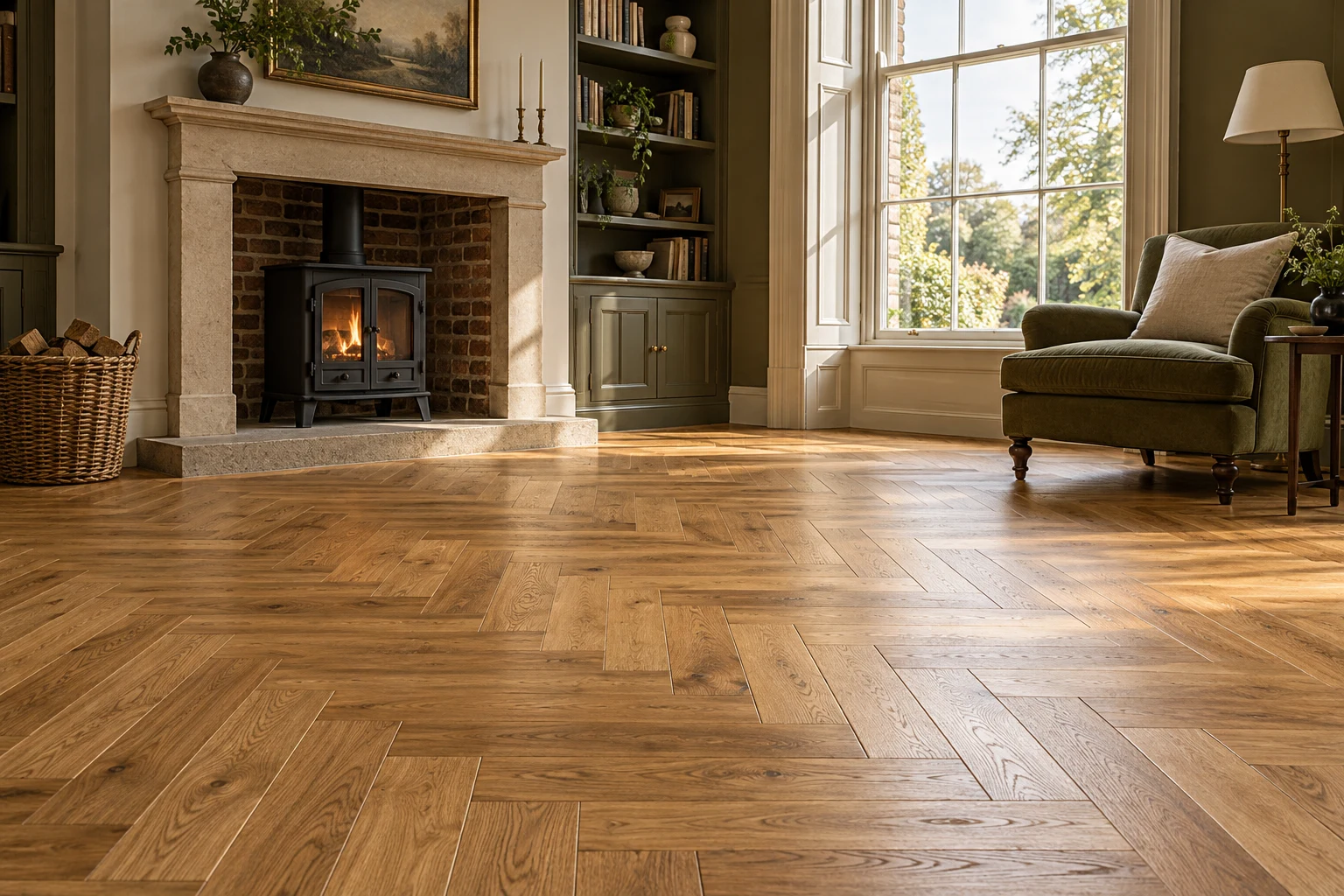
RIGHT BUILD GROUP · RICHMOND
Flooring Services in Richmond
A worn floor is not automatically a floor to remove. Assess its construction, remaining material and the cause of damage before choosing sanding, repair or replacement.
- Existing floor condition assessed
- Refinishing limitations explained
- Replacement scope considered clearly
Find out what is worn before deciding what must go.
A dull surface, a deep mark and a board that moves underfoot are not the same problem. Replacing the whole floor may be unnecessary in one case and fail to address the cause in another. Start by describing the symptoms and the history rather than choosing a treatment from appearance alone.
For Richmond, Right Build’s flooring service lists wooden-floor sanding and varnishing as well as fitting. Discuss the existing floor before ordering a replacement. A useful assessment should identify the construction and its limitations, then separate finish renewal from board or supporting-base work.
Keep the repair question open long enough to answer it.
Provide photographs of the whole floor and individual concerns. Include areas previously hidden beneath furniture and any history of leaks or earlier sanding. That information can guide assessment without proving the concealed condition or prescribing a method.
Ask what each option is intended to achieve. A new finish can change surface appearance but does not stabilise an unsupported board. Local replacement may address a damaged piece while leaving an aged colour difference. A broader renewal has a different scope and disruption.
Coordinate timber repairs and surrounding trim if floorboards, skirting or doors need attention. Potential structural concerns require the appropriate assessment. Ordinary finish work should not silently become a design for altering the supporting construction.
Ask the assessment to distinguish what is known from what remains uncertain beneath the visible surface. Product records or earlier photographs may help, but they do not prove how much usable timber remains everywhere. Where a local inspection or further advice is needed, keep that step clear before selecting a treatment. Avoid treating a favourable result in one corner as approval of the entire floor. The useful comparison sets out each suitable option’s intended outcome and limitation, giving the homeowner a reasoned choice rather than a promise that the smallest intervention always solves the problem.
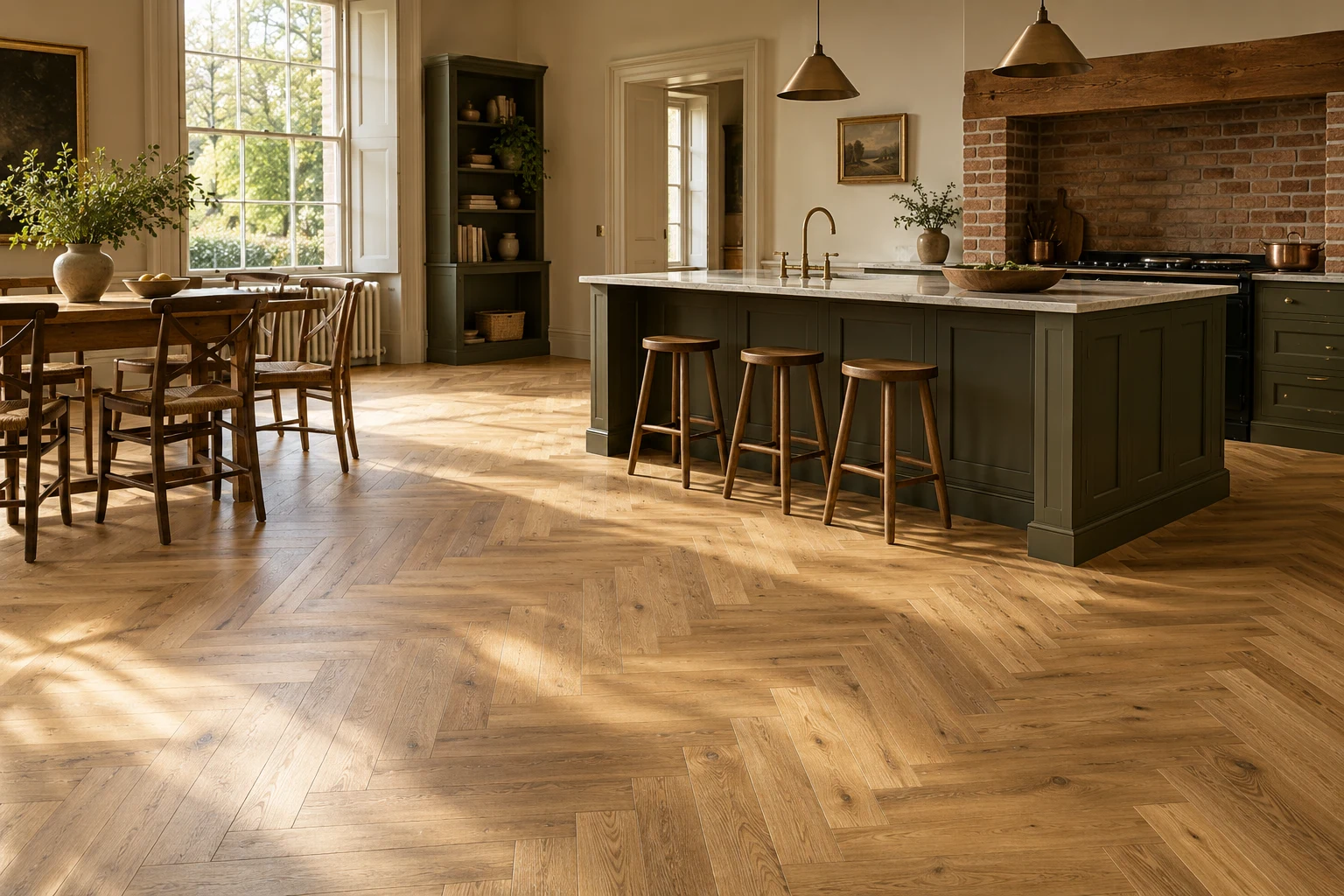
Compare the material beneath the finish.
The available repair depends on construction and condition, not the name alone.
| Material | Construction | Check before fitting | Future care |
|---|---|---|---|
| Solid wood | Timber through the board. | Profile, previous work and remaining material. | Assess before sanding or local repair. |
| Engineered wood | Wood face over supporting layers. | Actual wear layer and treatment history. | Refinishing may be limited. |
| Laminate | Decorative layer on a manufactured core. | Joint, damage and matching availability. | Not sanded back to timber. |
BEFORE THE FINISH
Replacement still needs the cause understood.
Sanding renews suitable surfaces; it does not resolve every cause of floor damage.
If replacement is chosen, assess the subfloor for soundness, flatness, cleanliness and moisture against the selected system. Removing a damaged surface does not establish that the base is suitable. Keep any uncertainty visible until the old covering can be lifted.
Distinguish local irregularities from broader slope. Flatness and level are different, and their correction needs a defined purpose. A thicker underlay should not be used as a general cure for movement or uneven support.
Where a smoothing or levelling compound is appropriate, select a compatible system for the timber or mineral substrate. Follow primer, application and readiness requirements. Do not add the same preparation to every room simply because replacement boards are being fitted.
Moisture can affect both existing timber and new products. Establish the relevant cause and readiness assessment before covering damage. New wet works or the room environment may matter too; a dry-looking face is not evidence that required testing has been satisfied.
Coordinate wider repairs through house refurbishment where several surfaces or services are involved. A finished floor should follow an understood background rather than conceal a repair that remains outstanding beneath it.
Move from assessment to a defined option.
Share the floor history
Show the room, affected boards and known earlier work. Explain movement, water events or finish wear without assuming they all need the same treatment.
Review repair and replacement
Identify construction and limitations. Compare the intended outcome, preparation and appearance of each appropriate option before buying materials.
Prepare and carry out the agreed work
Review exposed findings before covering them. Follow the relevant product or finishing requirements, keeping changed conditions visible.
Review the result and care
Check the agreed scope, edges and operation. Retain finish or replacement-product references, with readiness and maintenance information for normal use.
Keep heating in the repair assessment.
If underfloor heating exists or is proposed, provide its details before renewal decisions. The actual flooring and heating arrangement may affect preparation, replacement and operating guidance. A preferred replacement material is not sufficient compatibility evidence.
Follow relevant commissioning, restart and operating instructions after work. Check rugs and furniture against that guidance. Do not assume the previous routine remains appropriate if the covering, associated materials or heating arrangement has changed.
Agree what sanding can realistically remove.
Assess the floor’s construction and remaining usable timber before sanding. Previous work may have reduced the available material, and engineered products can have particular limitations. A general wood description is not a sanding specification.
Discuss stains, gaps and local repairs individually. Some marks may remain, and replacement pieces can differ from aged surroundings. Agree the expected result with the relevant installer rather than using a new showroom sample as a promise for an old floor.
Where a board is loose or soft, establish the cause and support condition before refinishing. A new coating cannot make deteriorated timber or an uncertain fixing arrangement suitable. Keep necessary repair work distinct from the surface treatment.
Consider the occupation plan as part of choosing an option. Furniture movement, protection and readiness for return depend on the method and products. Avoid comparing repair and replacement only by their final appearance while leaving those practical differences unexplained.
Review the boundaries around fixed furniture and adjoining rooms before agreeing a refinishing area. An exposed surface may have aged differently from material covered for a long time. If the work stops at a doorway or around a retained unit, discuss the resulting relationship rather than assuming the line will disappear. A local intervention can be an honest and useful choice, but it should be chosen with that appearance understood. Keep the agreed scope linked to room photographs so the installer and homeowner are not working from different ideas of what the renewal includes.
Prepare the Richmond assessment information.
Gather any product labels, invoices or photographs from earlier work. Even partial information can help identify the construction or treatment history, but mark uncertainty clearly. An old description should not be treated as proof of the floor’s present condition.
If older boards or significant details may be affected, obtain relevant property-specific advice before removal or alteration. Retention and replacement can have different implications. Do not assume every old floor is protected or that an internal location makes disturbance unrestricted.
Photograph transitions to retained areas. A repair boundary may not coincide with a doorway, and matching matters differently across an open view. Decide where the work should stop and what appearance relationship is realistic before components or finish products are ordered.
Explain what you value in the existing floor. It may be the character, the continuity through rooms or simply avoiding unnecessary removal. Those priorities can inform the comparison without overriding its assessed condition. If replacement is appropriate, ask how the new product changes the level, care and adjoining details. The decision should compare complete usable outcomes rather than only the appearance immediately after work. Record any retained components and product information before removal so useful evidence is not lost while the preferred option is still being finalised.
Match renewal to room use.
Kitchen
Review spill history and current room suitability before retaining or replacing the surface. Coordinate appliance access with any kitchen work and do not treat refinishing as a remedy for a leak.
Hall
Consider grit and repeated traffic alongside the wear pattern. Review matting, door movement and transitions against the floor rather than choosing a treatment solely to hide the busiest route.
Living room
Compare shaded and exposed areas when discussing aged colour. Review furniture feet and rugs, then follow the relevant coating or replacement-product care guidance.
Compare the complete outcome of each option.
A sanding proposal, a local repair and replacement can include different preparation and finishing. Ask what each is intended to achieve and which defects remain outside its scope. A smaller initial intervention is not automatically suitable for the condition.
Identify removal, disposal, furniture handling and work at doors or trims. Keep inspection-dependent items visible. If a new floor changes the build-up, include the transition consequences rather than comparing only the cost of boards with surface renewal.
Compare each option by the result it can reasonably achieve. A local repair may leave an aged difference; wider refinishing may involve more furniture handling; replacement can change levels and trims. Ask what remains visible or unresolved under each proposal. If reducing the scope, choose an honest repair boundary or a simpler replacement layout, while keeping necessary support and moisture work included.
The existing surface and its renewal choices.
Look at construction, damage and adjoining details before deciding how much material needs replacing.


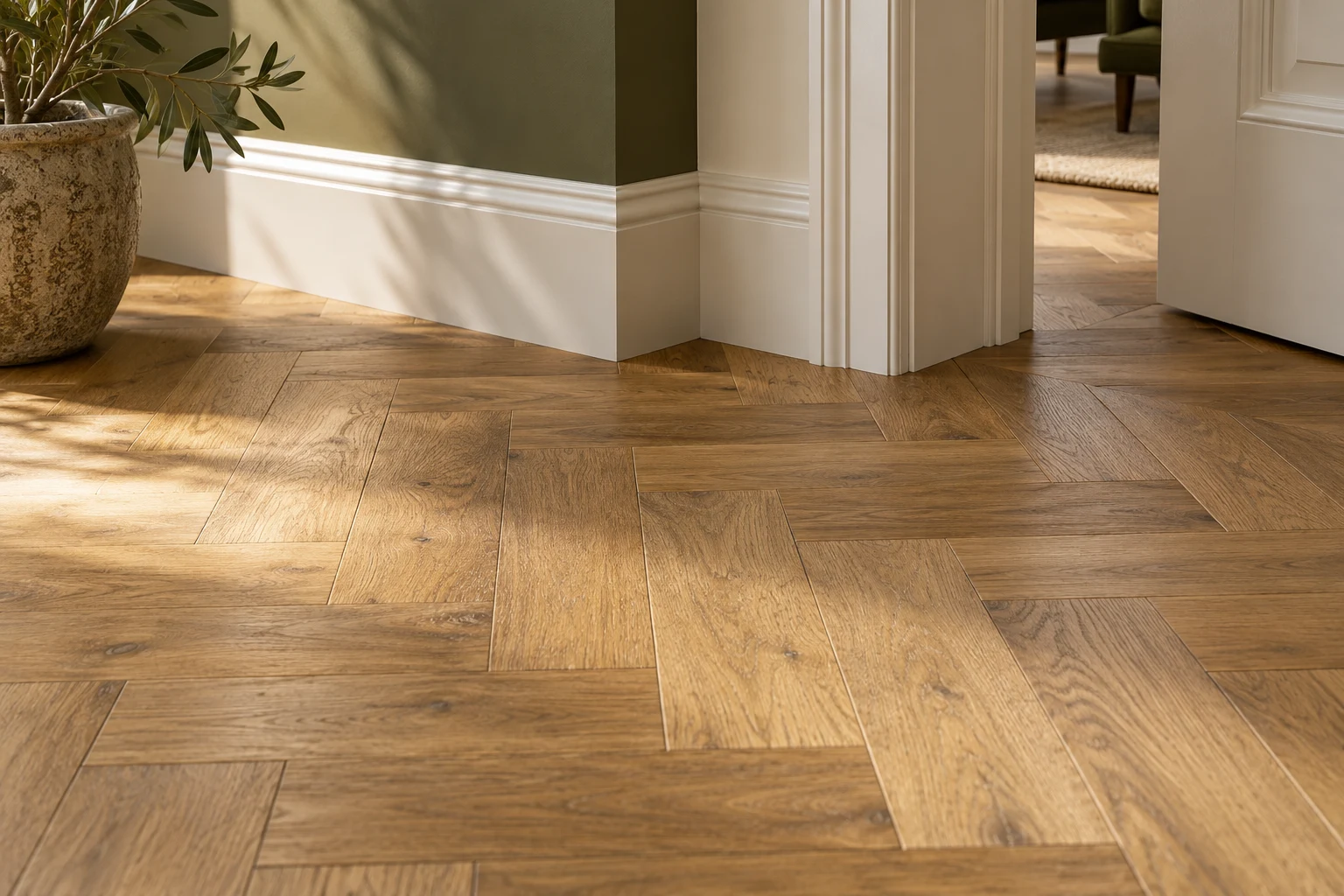
Questions before the floor is ordered.
Can every timber floor be sanded?
No. Assess construction, profile, previous treatment and remaining usable material first. A wood appearance or thick original board does not establish unlimited sanding scope.
Does engineered wood always have too little material?
Engineered products differ. Identify the wear layer and condition rather than applying a blanket rule to every board described as engineered.
Can laminate be sanded to remove marks?
Its decorative surface is not a timber wearing layer. Discuss an appropriate repair or replacement instead of treating it as solid or suitable engineered wood.
Will sanding remove every stain?
Not necessarily. Cause, depth and material condition affect the outcome. Agree realistic expectations for particular marks rather than assuming the whole floor will become visually new.
Should loose boards be varnished first?
Assess movement and support before finish work. A new coating does not resolve every fixing or base problem, and the relevant repair may need a separate scope.
Does a replacement floor need movement allowance?
Follow its manufacturer’s instructions for the layout and fixed obstructions. Plan skirting and profiles around required movement rather than copying the old edge automatically.
Can a new board match an old floor?
A close relationship may be possible, but age, finish and product availability can leave a visible difference. Review samples and the proposed repair boundary before ordering.
When can furniture return after renewal?
Use the finishing or installation readiness guidance and agree suitable handling. Do not assume the same interval applies to every coating or replacement system.
An existing floor elsewhere to assess?
Use the area links or main flooring service with photographs and any product history you have.
Assess what can stay before ordering what comes next.
Arrange a Richmond survey and compare suitable repair, refinishing and replacement options for the floor.