
RIGHT BUILD GROUP · CHISWICK
Bathroom Refurbishment in Chiswick
A new tile face should not hide an unresolved leak. Plan your Chiswick bathroom around the cause, damaged material and a sound replacement wet area.
- Leak-related condition assessed
- Full or partial replacement scope
- Preparation before decorative finishes

A ROOM YOU USE EVERY DAY
Find the problem before choosing its cover.
When a bathroom has leaked, replacing the visible tiles can be tempting. But a damaged ceiling below, soft floor or recurring stain may point to different causes and different repairs. The first decision in a Chiswick refurbishment is what needs investigating, not which new tile can conceal the evidence.
Right Build provides bathroom refurbishment and associated plumbing, preparation, tiling, joinery and decoration. We can discuss a defined repair area or a full refit. At the survey, bring the history of the problem and explain any work already done, so the proposed scope addresses condition as well as the room’s new appearance.
CHOOSE THE RIGHT SCOPE
Match the intervention to what has failed.
A repair-led partial refurbishment
A localised problem may allow some fittings and finishes to remain. Establish the affected area and how the repair will meet retained work. Do not assume the visible stain gives the full extent of damage or that matching the old finish will be straightforward.
Renew the shower area
A failed shower may involve the tray connection, plumbing, movement or waterproofing. Assess the relevant components together before replacing the tile face. The new specification needs suitable backgrounds and junctions, not simply a fresh bead of sealant.
Refit while the room is open
If removal exposes wider problems or the old layout is also inconvenient, a complete refurbishment may be worth discussing. Keep the repair needs separate from optional upgrades so the decision to improve the room does not obscure the work needed to restore a sound base.

LAYOUT BEFORE FINISHES
Keep a record of the leak's history.
Explain when the problem appears: during showering, after bath use or independently of either. Share photographs and previous repair information if available. This is useful context for assessment, but it should not become a diagnosis made solely from a description.
If the room is opened, review the exposed floor and wall material before deciding how it will be rebuilt. Damaged or unstable backgrounds need an appropriate repair, and the cause of moisture needs attention before new work closes the area. A decorative schedule should follow that understanding.
Once the repair scope is clear, consider whether the present layout is worth retaining. Moving fittings solely because the room is open adds its own service work. Separate that choice from the necessary repair and review it against drainage, supply and the remaining budget. Where the optional changes extend into other rooms, define them with the wider refurbishment proposal.
WHAT HAPPENS, AND WHEN
Rebuild in an order that can be checked.
The important point is not to conceal a stage that still needs assessment. The actual sequence depends on the cause, condition and chosen products rather than a standard promise attached to a leak.
| Stage | What happens | Your decision point |
|---|---|---|
| History and assessment | Review symptoms, previous repairs and the existing installation. | Identify what needs investigating before specifying the finish. |
| Controlled removal | Open the agreed area and inspect exposed material and connections. | Review the extent of damage and additional repair needs. |
| Repair and preparation | Address the agreed cause and prepare stable backgrounds and services. | Confirm the repair scope before covering it. |
| Waterproofing and fit-out | Install the specified wet-area system, tiles and fittings. | Coordinate details at corners, penetrations and tray junctions. |
| Checks and care | Review operation, finishing and maintenance information. | Understand the installed arrangement and how to care for it. |
THE TECHNICAL DETAILS
Separate pipework, waterproofing and decorative finish.
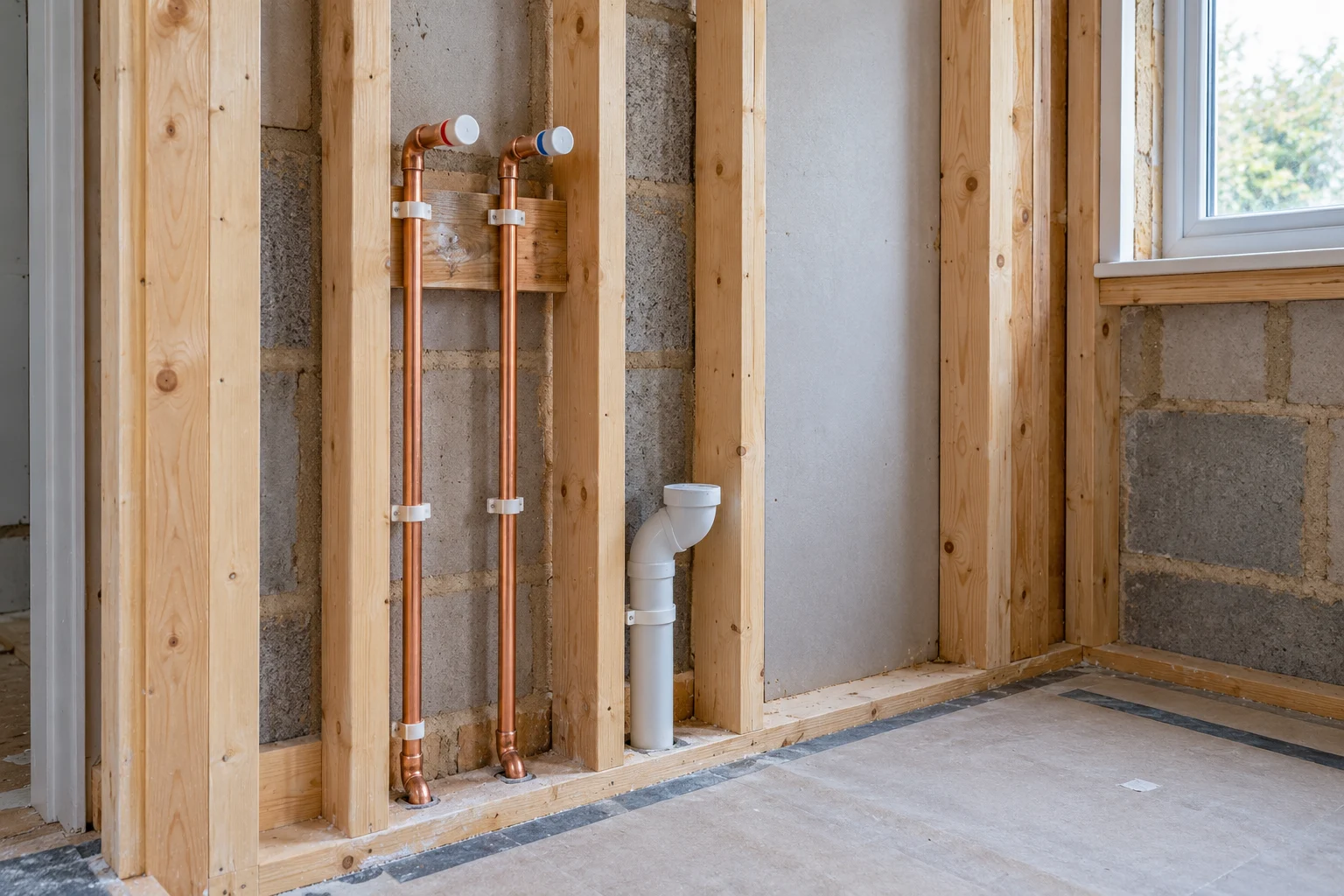
Assess connections as well as the suite
A plumbing connection and a failed wet-area detail can produce similar visible staining. The existing supplies, waste route and accessible connections need consideration alongside the history. Replacing a tap or trap without checking the relevant cause may leave the problem unresolved.
For replacement fittings, confirm compatibility with the existing supply and provide maintainable access to concealed parts. If the layout changes, assess drainage and floor construction before ordering. New products should not be used to avoid understanding the installation they connect to.
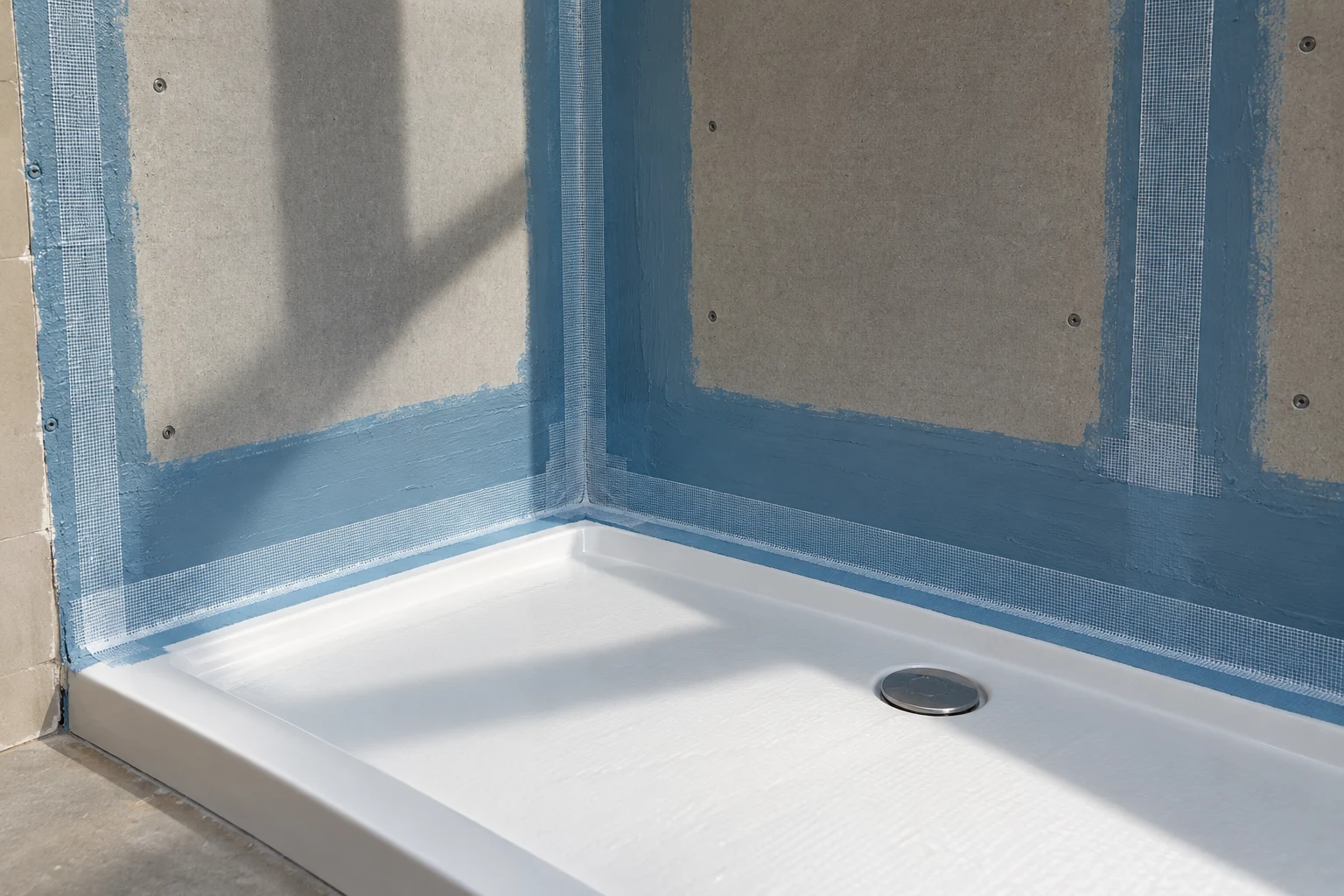
Rebuild the waterproofing detail
The membrane, background, corners and tray or drain connection must form a coherent specified system. Tiles and ordinary grout are not the waterproofing on their own. Identify the areas being renewed and how they meet any retained work.
Preparation needs to follow the chosen system’s instructions, including drying or curing stages. If there is uncertainty about the condition behind a retained surface, discuss that limit explicitly. A small visible repair does not establish the integrity of everything around it.

Finish on a suitable background
A replacement tile needs more than a colour match. Background stability, thickness, adjoining edges and the condition of the remaining material affect how new and old work meet. Discuss the setting-out and any unavoidable finish change before fixing.
For a full replacement, consider tile size, wall condition and the floor’s wet-use suitability. Agree niches, exposed edges and access panels before application. Keep cleaning advice and product information so the finished room can be maintained appropriately.
AIR, LIGHT & EVERYDAY COMFORT
Do not confuse every moisture problem with a leak.
Tell us about condensation, fan use and any recurring surface mould as well as water escaping from fittings. The ventilation route, fan and discharge need assessment for the proposed room. A new visible unit alone does not prove that the ducted arrangement works as required.
Electrical fittings affected by the scope need attention from the appropriate electrician. Confirm lighting, heated mirrors and towel-rail choices before preparation and tiling are closed. Coordinate those requirements with the moisture repair rather than treating them as unrelated late additions.
PLANNING THE WORK IN CHISWICK
Consider where the damage reaches.
For your Chiswick visit, photograph the affected bathroom and adjoining finishes before items are removed. Keep the history of symptoms and earlier repairs together. Tell us whether the issue appears during a particular use, and identify any other room or property that has been affected.
Where a shared connection or another person’s ceiling may be involved, identify the responsible contact and discuss access for assessment. Keep the evidence separate from assumptions about fault or the cause. The installation proposal needs a repair boundary based on findings rather than the edge of your preferred tile.
After the affected area is opened, compare the necessary repair with optional improvements to the room. Record what is being retained and where new finishes will meet it. This makes it easier to authorise useful work without allowing a leak repair to turn into an undefined collection of upgrades.
WORKING WITH RIGHT BUILD GROUP
Make the repair decisions visible.
Share evidence and earlier work
Send the symptoms, photographs and any information about previous repairs. Explain what you want to retain and what is inconvenient beyond the moisture problem.
Agree the investigation and refit scope
Use the survey to distinguish known work from condition that may only be visible after removal. Record supply responsibilities and optional changes in the quotation.
Review findings before rebuilding
Discuss the exposed damage and proposed response, including its effect on cost and sequence. Do not let the decorative finish become a reason to close unresolved work.
Check the replacement arrangement
Review operation, finishing and maintenance access at handover. Keep information on the installed fittings and wet-area products.
BUILDING A USEFUL QUOTATION
Keep repair costs distinct from improvements.
A new suite and a moisture repair are not interchangeable descriptions of work. The quotation should identify the known preparation and installation, with a clear way to discuss concealed findings. The size of a stain is not a reliable measure of the repair beneath it.
Retaining fittings may be sensible where the remaining installation is suitable. It can also create awkward junctions or access limits. Compare that scope with a fuller replacement using actual work and finish boundaries, rather than assuming partial always means simpler.
Optional layout changes, tile choices, storage and electrical additions have their own cost implications. Confirm specifications and availability before booking. Discuss disruption and the relevant preparation periods honestly, especially if the damaged room is the only bathroom available.
BEFORE YOU COMMIT
Questions worth asking.
Will replacing the shower tiles stop the leak?
Not necessarily. The cause may involve a connection, movement or a waterproofing junction. Assess the relevant installation and damaged background before treating a new tile face as the repair.
Does a small stain mean a small repair?
Its visible size does not establish what has happened behind the finish. Share the history and allow the affected connections and material to be assessed before agreeing the response.
Can the existing bath or basin stay?
Explore retention against its condition, access and the work required around it. Define how the repair meets the retained installation rather than assuming removal is unnecessary.
What if the old tile cannot be matched?
Discuss the finish boundary before rebuilding. A defined replacement area or wider retiling may be considered, with the practical and visual implications made clear.
Should we change the layout while everything is open?
Keep that decision separate from the necessary repair. A new arrangement needs its own drainage and supply assessment and should not be adopted simply because removal has started.
How do we agree damage found during strip-out?
Review what is exposed, the cause and proposed repair before covering it. Ask for the additional work and its effect on scope to be explained so the decision is informed.
How can we keep repair decisions separate from upgrades?
Record the work needed to address the assessed cause and damaged material, then list the optional changes you would like to consider. Ask how each affects removal, services and reinstatement. This lets a necessary repair be agreed without automatically approving a different layout or a larger decorative scheme. When findings change during opening up, update the decision against those two lists. The aim is a defined sound repair and a deliberate choice about improvements, rather than a refit that grows because every newly visible surface becomes an assumed replacement.
Can we keep a record of what was repaired?
Keep the relevant photographs, product information and agreed description of the repair with the bathroom documents. Record the affected area and the boundaries between renewed and retained work, rather than relying only on pictures of the finished tile. Ask about access and care for the installed products at handover. If the original problem affected another room, review its reinstatement separately so it is not lost in the bathroom finish check. A clear record helps explain the completed installation later without turning an attractive new surface into the only evidence of what was done.
BATHROOM SERVICES BEYOND CHISWICK
Considering work at another property?
Explore our bathroom services in Shepherd's Bush, Acton and Hammersmith, or see the main service page for the wider installation scope.
LET’S PLAN YOUR BATHROOM
Tell us what has happened to the room.
Arrange a Chiswick bathroom survey with Right Build. Bring the leak history, photographs, previous repair information and the improvements you would like to consider after the cause is addressed.