

RIGHT BUILD GROUP · HOLLAND PARK
Flooring Services in Holland Park
A renewed timber finish should reflect the character you want to keep. Discuss previous coatings, colour and visible marks before choosing treatment, with a realistic view of how the existing floor may respond.
- Coating history discussed
- Finish expectations made clear
- Care matched to the treatment
Decide what a renewed finish should look like.
Some homeowners want a lighter-looking floor; others want the existing warmth without a worn traffic strip. Those are different briefs. For a Holland Park timber floor, describe the colour, sheen and character you want to retain before asking for a general freshen-up. Explain which marks are part of the room’s appeal and which are the reason for the enquiry.
Right Build’s wooden-floor service includes sanding and varnishing, subject to assessing the floor. Bring any information about previous treatments and the products used for care. A finish discussion is more useful when it starts with what is on the timber now and what change you hope to see, rather than a photograph of a completely different new floor.
Describe the colour and character, not just the word new.
Photograph the floor in daylight and normal evening lighting. Show a busy route, a quieter corner and an area normally covered by furniture if accessible. The aim is to explain the range of existing appearance, including the part you like, rather than select one flattering image as the whole brief.
Share the history of varnish, oil, polish or other treatments where known. Keep unknowns clear. The appropriate preparation and finish should follow assessment of the floor and compatible product guidance. An earlier household cleaning product can be useful information even when its exact application date is forgotten.
Ask whether a representative trial or sample discussion is appropriate for the proposed treatment. Agree what it can help judge and where it will be reviewed. A small example can support a colour and sheen conversation, but the existing timber and its variation still influence the complete room.
Separate a preference for patina from a request to leave every damaged or poorly performing area untreated. Identify the visual features you value and the practical concerns that need attention. This gives the finish discussion a clear purpose without promising that all marks disappear or that all variation can remain unchanged.
Compare the proposed sheen beside retained skirting, furniture and the room’s lighting. A finish described as matt in one range need not look identical to another. Keep the named treatment with the agreed expectation so the chosen appearance is not reduced to an informal colour description.
Discuss local marks and previously treated areas before choosing a broad outcome. Their response may differ from cleaner or less worn timber. Ask which limitations can be identified during assessment and keep the visual expectation realistic, especially where a sample of new wood is being compared with an aged floor.

Compare the finish commitment behind the surface.
A finish renewal starts with existing timber and previous treatment. New flooring options bring their own construction and care requirements, so compare them as different choices.
| Material | Construction | Check before fitting | Future care |
|---|---|---|---|
| Retained timber | An existing floor with its own repair history. | Condition and remaining usable material. | Agree the appropriate renewed finish and limitations. |
| New engineered wood | Timber face supported by layered construction. | Installation and future treatment guidance. | Retain wear-layer and coating references. |
| New laminate | Decorative surface over a manufactured core. | Room suitability, joints and prepared base. | Use its own cleaning and replacement instructions. |
BEFORE THE FINISH
Preparation should suit the existing treatment and timber.
A smaller replacement area does not remove the need to assess the background.
Inspect the existing boards and relevant support before selecting surface work. Movement can arise from different conditions and should not be treated by adding a coating. Where potentially structural timber is involved, obtain appropriate assessment rather than extend a decorative brief into unreviewed construction.
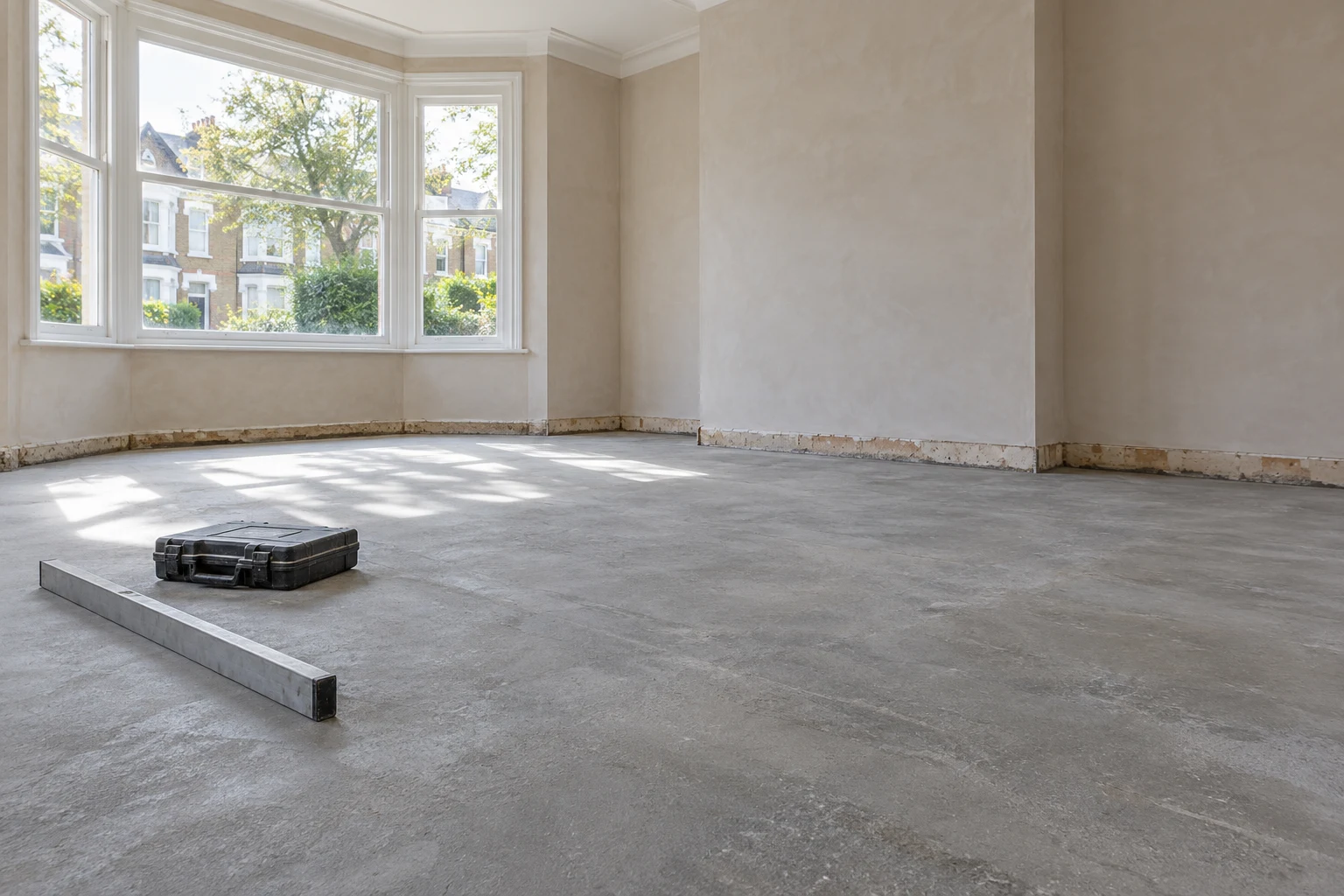
If areas are removed, check the exposed base for soundness, cleanliness, flatness and moisture against the intended installation. An old surface can conceal earlier repairs or mixed construction. The new treatment should follow what is found rather than a uniform assumption based on the visible boards.
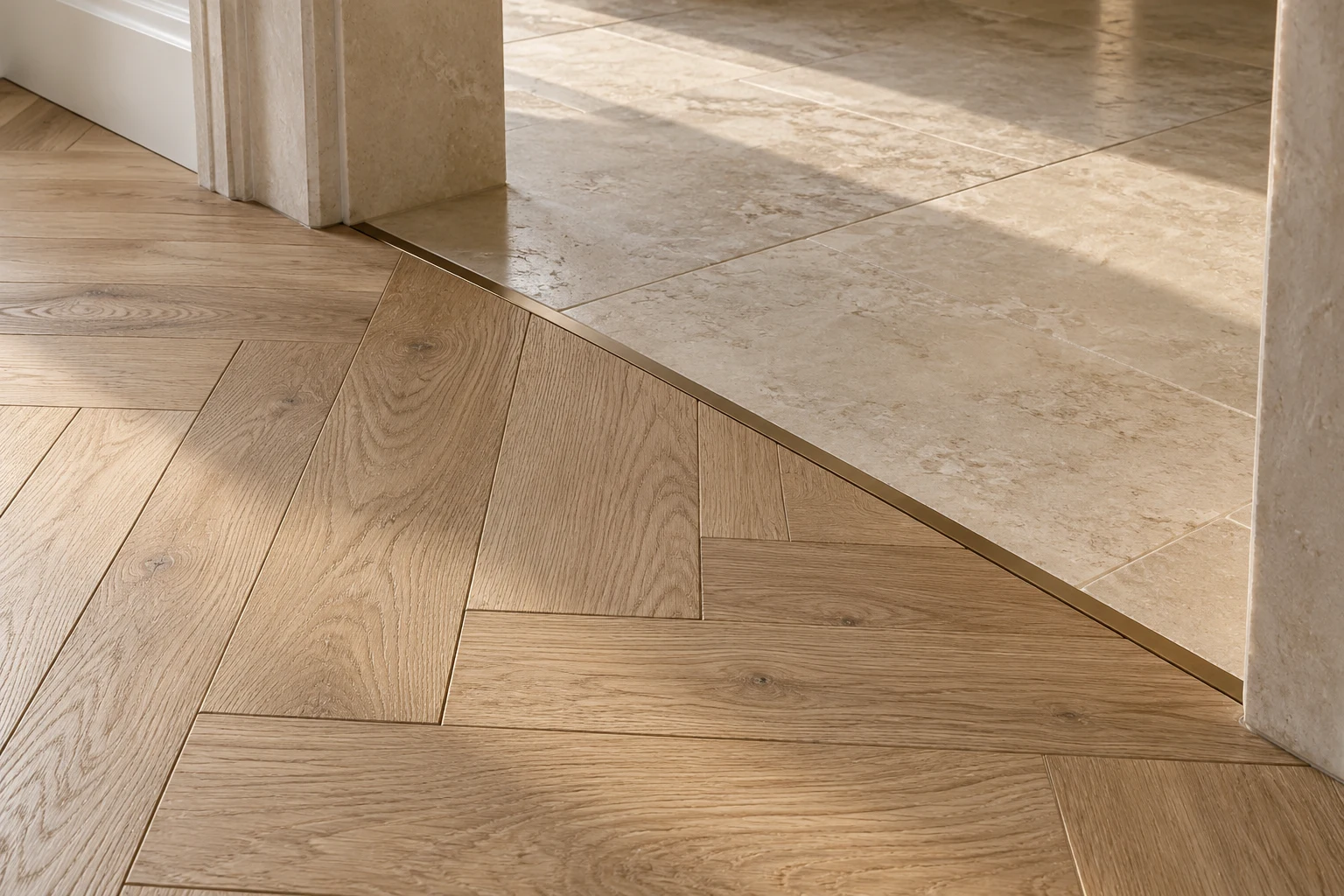
A correction product or overlay, where proposed, needs suitability for the substrate and full preparation instructions. It should not be selected simply to hide a transition between retained and new areas. Agree how the construction works before choosing a cover profile for the finished edge.
Raise known leaks or recurring staining before refinishing or enclosure. Relevant moisture assessment is different from judging whether a surface looks dry. Keep any required investigation and compatible system measures distinguishable from optional appearance changes so the next step is clear.
Agree the finish expectation before treatment.
Record condition and priorities
Show the whole floor and close views of worn, loose or damaged areas. Share previous repairs where known. Explain which features matter and whether the aim is a local improvement or a wider finish change.
Compare feasible treatments
Review the construction and limits of sanding, repair or replacement. Coordinate floorboard and trim carpentry where relevant. Record the intended boundary, supply and preparation responsibilities before scheduling depends on them.
Review newly exposed information
Confirm findings before dependent treatment proceeds. A thinner wearing surface, damaged base or different construction may affect the agreed option. Keep the response recorded rather than continue from an expectation the assessment has changed.
Review finish and future care
Check the agreed repaired areas and surrounding details with realistic matching expectations. Retain the coating, product and care information. Follow relevant return-to-use guidance before furniture and rugs obscure the finished surface.
Review heating against the retained or new construction.
If underfloor heating exists or is proposed, identify the system and floor before choosing treatment. A known existing floor does not automatically establish that a changed build-up or finish is compatible. Review the selected products and associated layers with the heating information.
Use relevant commissioning and operating instructions rather than a general assumption about timber floors. Include rugs and fixed furniture where relevant. If the proposed heating work changes construction, distinguish it from ordinary refinishing so the scope and advice remain understandable.
Keep condition repairs separate from the colour brief.
A damaged board, movement beneath the surface and a worn coating need different responses. Explain those concerns alongside the finish preference. Necessary repairs should be identified before the treatment is selected, with the homeowner clear about which part of the work addresses condition and which changes appearance.
The proposed treatment needs assessment of the construction and available material. Engineered products have different limits and laminate is not sanded as timber. Keep that assessment as the basis for choosing a method, while the main finish conversation remains about colour, sheen, retained character and care.
If old and new work meet a doorway or retained fitting, coordinate the wider making-good scope. A local floor repair can expose an unfinished edge or missing trim. Define who completes it rather than leaving it outside the description because the main field remains existing.
Bring the Holland Park floor’s treatment history.
Find old coating tins, invoices or care instructions if they are available, and photograph their labels. They can help identify the treatment without requiring the homeowner to recreate its complete history. Explain which cleaning products are used now and what prompted the wish to renew the finish.
Show the retained furniture and fabrics that influence the colour choice. If they will remain during the project, discuss access and clearance early. A representative finish should be viewed with the room in mind, not chosen solely from a loose piece under different lighting.
Where significant existing boards or protected fabric may be affected, obtain appropriate advice before a treatment or removal changes that material. Describe the proposed work plainly. The decision about finish appearance belongs alongside any applicable property requirements, not in place of them.
In a shared or managed property, confirm access arrangements for the proposed work and identify the contact for any relevant requirements. Explain occupied-room needs honestly. Keep an authorised decision-maker available if assessment reveals a treatment limitation that changes the options being compared.
Choose the renewal with later care in mind.
The result you want
Use concrete examples: less sheen, a worn route renewed or a colour that works with retained furniture. Identify the variation you value. A clear expectation helps distinguish a feasible finish choice from a request to make aged timber identical to new boards.
The treatment on the floor
Keep the finish reference and compatible cleaning advice after work. Before adding a polish or maintenance product, check that it belongs with the installed coating. A familiar treatment from another room may change the appearance or care of this one.
The return to use
Follow the selected treatment’s instructions for furniture, rugs and cleaning. Ask which actions should wait and how the room is brought back into ordinary use. A finished-looking sheen is only one observation, not the full product guidance.
Compare the renewal method and its boundaries.
Local repair, wider sanding and complete replacement involve different work. Compare preparation, material, finishing and boundaries explicitly. The cheapest-looking surface option may leave a separate defect that the homeowner expected it to resolve.
Identify removal, disposal, furniture movement and associated trim work where relevant. Keep inspection-dependent findings visible. A retained floor can still need meaningful preparation, while a new covering should not be interpreted as a remedy for every concealed condition.
If the budget requires prioritising, distinguish necessary condition work from optional appearance changes. Coordinate the decision within the overall refurbishment where applicable. A smaller coherent repair can be more understandable than a larger scope containing unresolved assumptions.
Existing character and a considered renewed finish.
A finish renewal should answer a clear visual brief, with previous treatment, retained character and later care considered before work begins.


Questions before the floor is ordered.
How should we describe the finish we want?
Bring examples of colour and sheen and explain the existing features you value. Separate a practical condition concern from the wish for a different appearance so each receives the right discussion.
What information about previous coatings is useful?
Labels, invoices and care instructions can help, along with the products currently used for cleaning. Mark unknowns honestly; there is no need to invent a complete treatment history.
Can a trial area help choose the result?
Ask whether it is appropriate for the proposed treatment and what it can help assess. Review it in relevant light while recognising that the rest of the existing timber may vary.
Does finish renewal mean every old mark disappears?
Do not expect that automatically. Discuss marks and previously treated areas during assessment and agree a realistic visual result before selecting the method or colour.
Can we keep the floor’s aged character?
Explain which variation matters and which defects need attention. A retained character brief should still distinguish useful material from condition concerns requiring a separate response.
Will two finishes called matt look identical?
Compare the named product and a relevant sample. Texture, timber and lighting influence appearance, so the descriptive word alone is not a complete finish specification.
Can the old cleaning routine continue afterwards?
Check the renewed treatment’s care guidance. An existing polish or cleaner may not suit the installed coating even if it was familiar on the floor before the work.
When can furniture and rugs return?
Use the selected treatment’s guidance and discuss the practical sequence. Visual completion alone should not determine readiness for every heavy movement, covering or cleaning action.
Related flooring locality information.
Assess the existing floor at each property before transferring a repair or replacement decision from another location.
Explain the finish you want to live with.
Arrange a Holland Park flooring survey with treatment information, room photographs and the character you want the renewed finish to retain.