

RIGHT BUILD GROUP · BLACKHEATH
Flooring Services in Blackheath
A damaged board does not always decide the fate of the whole floor. Assess the condition, repair boundary and matching expectations before choosing replacement or refinishing.
- Existing timber assessed before replacement
- Patch boundaries considered carefully
- Finishing and associated carpentry coordinated
Separate the defect from the appearance around it.
A split board, a worn coating and an uneven patch can all make an existing floor feel tired, but they need different responses. For a Blackheath flooring enquiry, show the specific concern and the wider surface. A close-up helps identify the problem; the surrounding room helps discuss the appearance of a repair.
Right Build’s flooring service includes sanding and varnishing wooden floors, preparation and fitting. Assess the existing construction before assuming wholesale replacement is necessary. A useful proposal distinguishes condition-led repair from an optional change made for visual consistency.
Agree what a good patch will look like.
A new board beside an aged floor can differ in colour, grain and finish even when its dimensions are close. Discuss the acceptable result before ordering material. An invisible match should not be assumed, and a photograph alone may not communicate the full difference.
Review a representative piece in the room where practical. Compare its edge profile, width and thickness as well as its face. Compatibility with the existing joint and installation method matters; visual similarity does not establish that a replacement can be fitted appropriately.
Choose a deliberate repair boundary. A local patch may preserve useful material, while wider refinishing could be considered for a different visual outcome. Keep those options distinct so necessary repair does not quietly become a full aesthetic renewal.
Record any known previous work and whether the defect has changed. That information can direct assessment without proving concealed condition. If potentially structural timber or significant historic boards are involved, obtain appropriate advice before removal or alteration.
Ask whether a replacement piece is being matched in its unfinished state or as a finished surface. A coating can alter the appearance, and an aged surrounding floor may not respond in the same way. A representative trial or sample discussion can help set expectations without promising a perfect result.
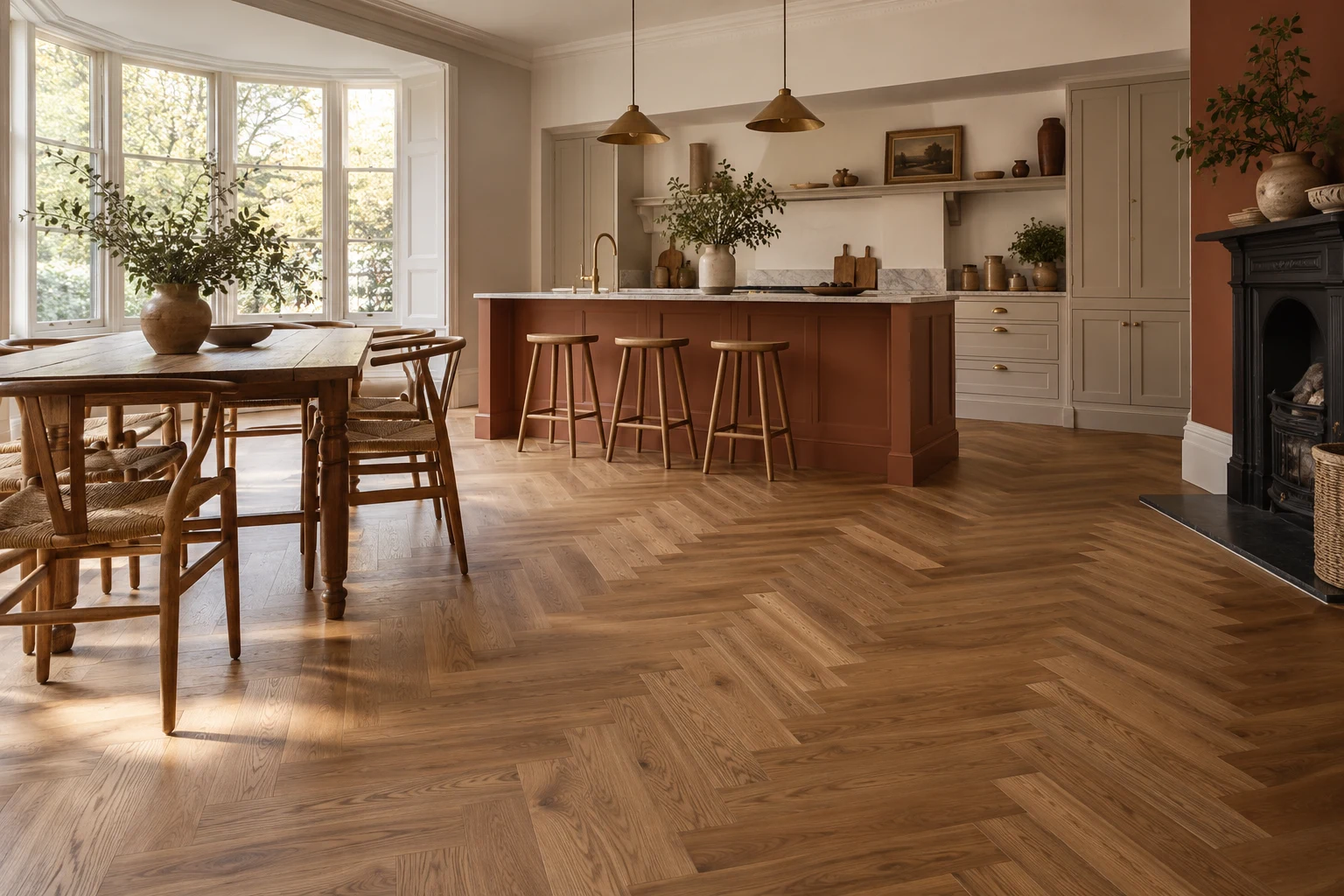
Repair potential follows the construction.
Compare the actual floor and permitted treatment rather than a broad material label.
| Material | Construction | Check before fitting | Future care |
|---|---|---|---|
| Solid hardwood | Timber throughout, with condition and profile affecting usable material. | Previous treatment, damage, joint and compatible replacement. | Discuss sanding or a local repair after assessment. |
| Engineered wood | Timber wearing face over supporting layers. | Wear-layer details and manufacturer treatment limits. | Do not assume every product permits the same refinishing. |
| Laminate | Decorative layer rather than a sandable timber surface. | Compatible planks, joint system and replacement method. | Use the specified cleaning and repair guidance. |
BEFORE THE FINISH
Check why the damaged area failed.
A matching board is only useful over an appropriate background.
Assess the base and fixings around the reported defect before choosing a response. A loose board, local movement and a damaged finish are not interchangeable diagnoses. The repair should follow the condition rather than simply replace the piece that looks worst.
Where removal exposes a different background, review it before reinstating. Soundness, cleanliness, flatness and moisture need consideration for the selected fitting system. Any additional repair should have an agreed scope rather than disappear beneath a new surface.
A smoothing or levelling compound is a possible preparation response to an assessed substrate, not a universal repair for movement. Confirm suitability for the particular base, including timber where relevant, and follow the compatible primer, thickness and drying requirements.
If water or persistent damp has affected the floor, establish the cause and appropriate readiness before fitting. A dry-looking face is not proof that the required assessment or test has passed. Keep any moisture-control layer part of a compatible installation system.
An expansion allowance gives the floor room to move where the product requires it. Its position, dimension and edge treatment need to suit the actual system. A local repair should not inadvertently restrain the surrounding installation with an improvised fixing or trim.
Where fixings or a board edge have failed repeatedly, share the history of earlier attention. The current assessment should consider why the previous response did not remain useful. Repeating a similar-looking patch without that information can leave the owner facing the same unresolved concern beneath a new finish.
Assess, compare and repair deliberately.
Show the whole condition
Provide the defect location, wider photographs and known history. Explain whether the main concern is operation, wear or appearance.
Agree repair options
Review construction and matching possibilities. Separate necessary repair from optional wider refinishing or replacement.
Prepare and reinstate
Review exposed findings and complete the agreed preparation. Follow the relevant product and finish requirements before covering the area.
Review the boundary
Check the repair and surrounding transitions against the agreed expectation. Keep material and coating references for later care.
Include any heating beneath the repair.
Identify existing or proposed underfloor heating before opening or replacing a floor section. Right Build’s service includes wet and electric heating discussion, but the actual system, floor and associated materials must be considered together. Do not assume a local repair can ignore the heating arrangement.
Follow the relevant manufacturer advice on testing, preparation, commissioning and operating conditions. If material changes in the repaired area, check compatibility and the effect on the complete build-up. Restart should follow the applicable procedure rather than a standard timetable invented for every floor.
If only one area is repaired, confirm how the work and any necessary heating procedure relate to the rest of the connected floor. Do not assume that a local intervention has no system implications. The relevant product and heating information should guide the arrangement.
Choose between repair, refinishing and renewal.
Sanding and varnishing can be discussed where the wooden floor’s construction and condition permit it. A worn coating may be a different scope from damaged boards or unsuitable support. Ask what the proposed treatment can reasonably improve and what is likely to remain visible.
For engineered wood, confirm remaining wearing material and permitted treatment. Laminate is not sanded into a timber surface. A local replacement may need different access or fitting work from a full-room installation, so its method should be assessed rather than inferred from spare boards alone.
Coordinate floorboard and trim carpentry where needed. If the repair reaches a door, hearth or cabinet, define the junction and making-good responsibility before the new piece is fitted.
A repair can have both a necessary boundary and a preferred decorative boundary. The affected material might end in one position while a coating change would look more deliberate at another. Ask the proposal to explain those two decisions so the amount removed is not driven by an unsupported assumption about matching.
Prepare the Blackheath matching discussion.
Photograph the floor in ordinary light and mark the repair area on a wider view. If possible, keep any known product or coating reference. A name remembered from an old invoice can help questions, but it should not replace assessment of the floor currently present.
Explain how much variation you are willing to accept. A working repair in a less prominent area and a patch in the main view can prompt different appearance decisions. Agree that expectation before the material order rather than judging it only after fitting.
If older boards or a protected interior may be involved, seek advice about the actual proposed intervention. Age or the area name does not determine what can be removed. Keep any relevant advice with the repair boundary and current proposal.
If you have spare boards, show their stored condition and any labels. Keep them available for assessment rather than assume they are interchangeable with the installed floor. Product changes, ageing or storage damage can affect whether they provide a useful repair option.
Where a replacement joint is visible, review its form as well as the colour of the board. A similar-looking face can still meet the surrounding floor differently. The appropriate fitting method should be established before appearance approval is treated as the final repair instruction.
Think about the room after the patch.
Kitchen
Discuss spill exposure and cleaning alongside the repair. Confirm product suitability and coordinate any kitchen changes that affect the edge or appliance access.
Hall
Check the route through the repaired area and adjacent doors. Grit and wet footwear need a care approach suited to the actual finish, not an assumed tougher replacement board.
Living room
View the proposed match beside retained furniture and under normal lighting. Decide whether a visible transition is acceptable or whether wider finish work should be considered separately.
Compare repair boundaries as well as material.
A quotation for one replacement board differs from one including investigation, background repair and a wider finish renewal. Ask what is included and how uncertain findings will be reviewed. The smallest visible patch does not necessarily define the work underneath.
Matching material, access and the installation method can affect the scope independently of area. Where the floor connects to wider refurbishment, identify responsibility for doors, trims and decoration rather than leave a repaired floor against an unfinished edge.
If an exact product is unavailable, compare complete appropriate alternatives with their limitations. A similar colour or nominal thickness does not prove compatibility. Keep the selected option and realistic appearance expectation recorded with the quotation.
Keep an optional full-room sanding or new coating item separate from the assessed local repair. That allows a useful comparison if the visual match is uncertain. It also makes clear which part of the proposal addresses damage and which part changes the appearance of sound retained material.
Ask the proposal to state the intended outcome at the patch boundary. That gives the owner and fitter a common reference if the existing floor varies more than a small sample suggested.
Repair boundaries and retained timber character.
Look at the existing construction, a representative replacement and the junction between them before choosing the scope.
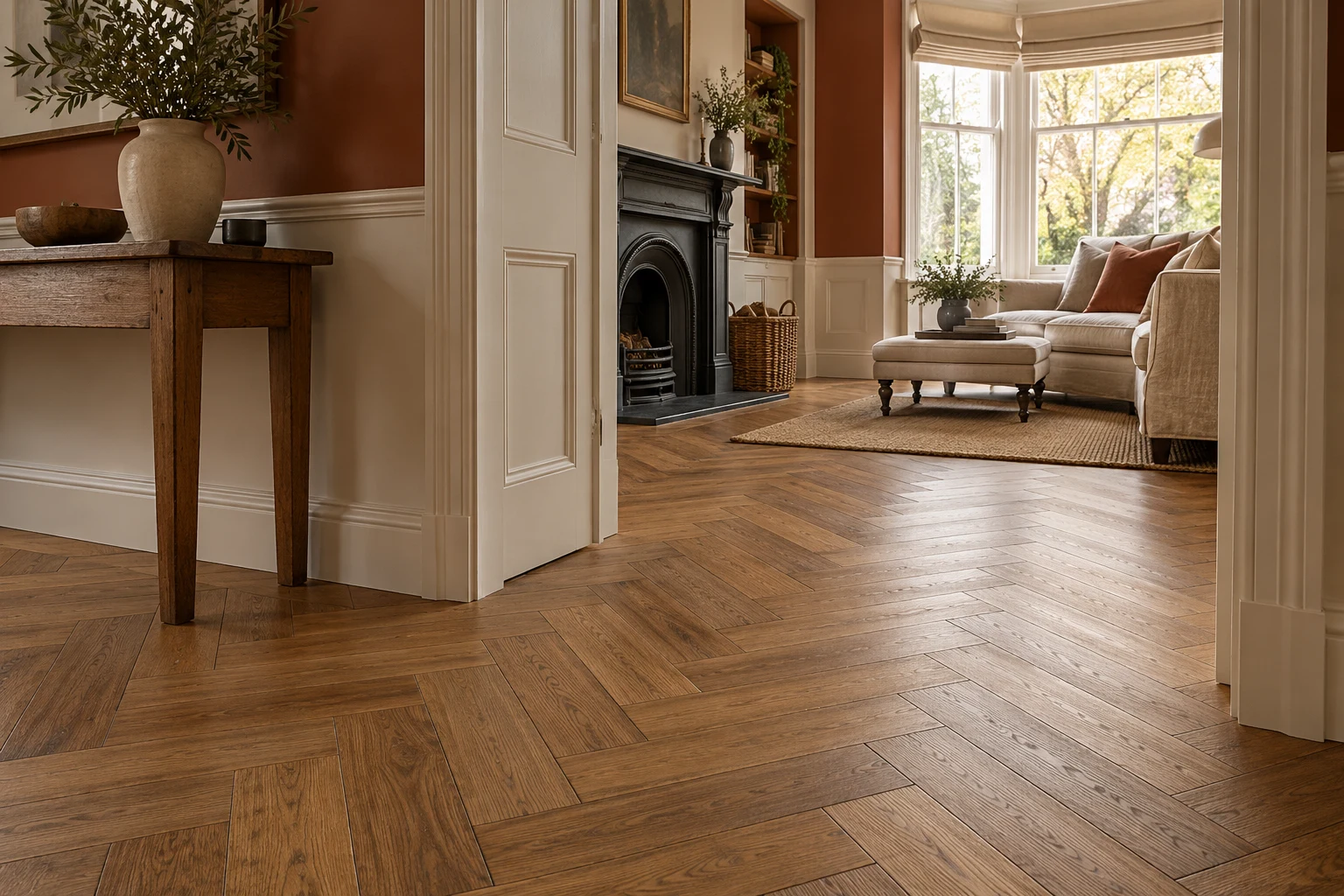

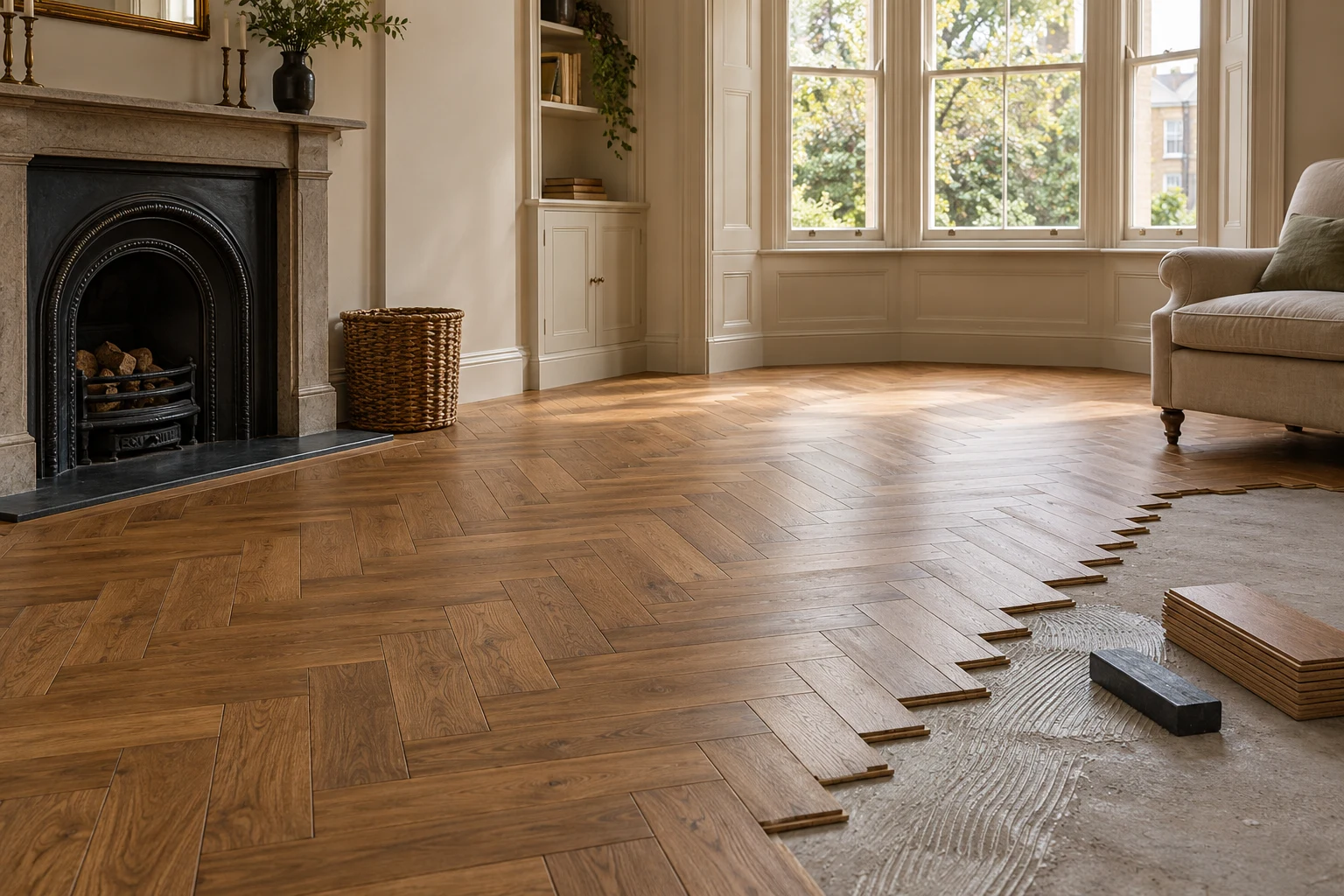
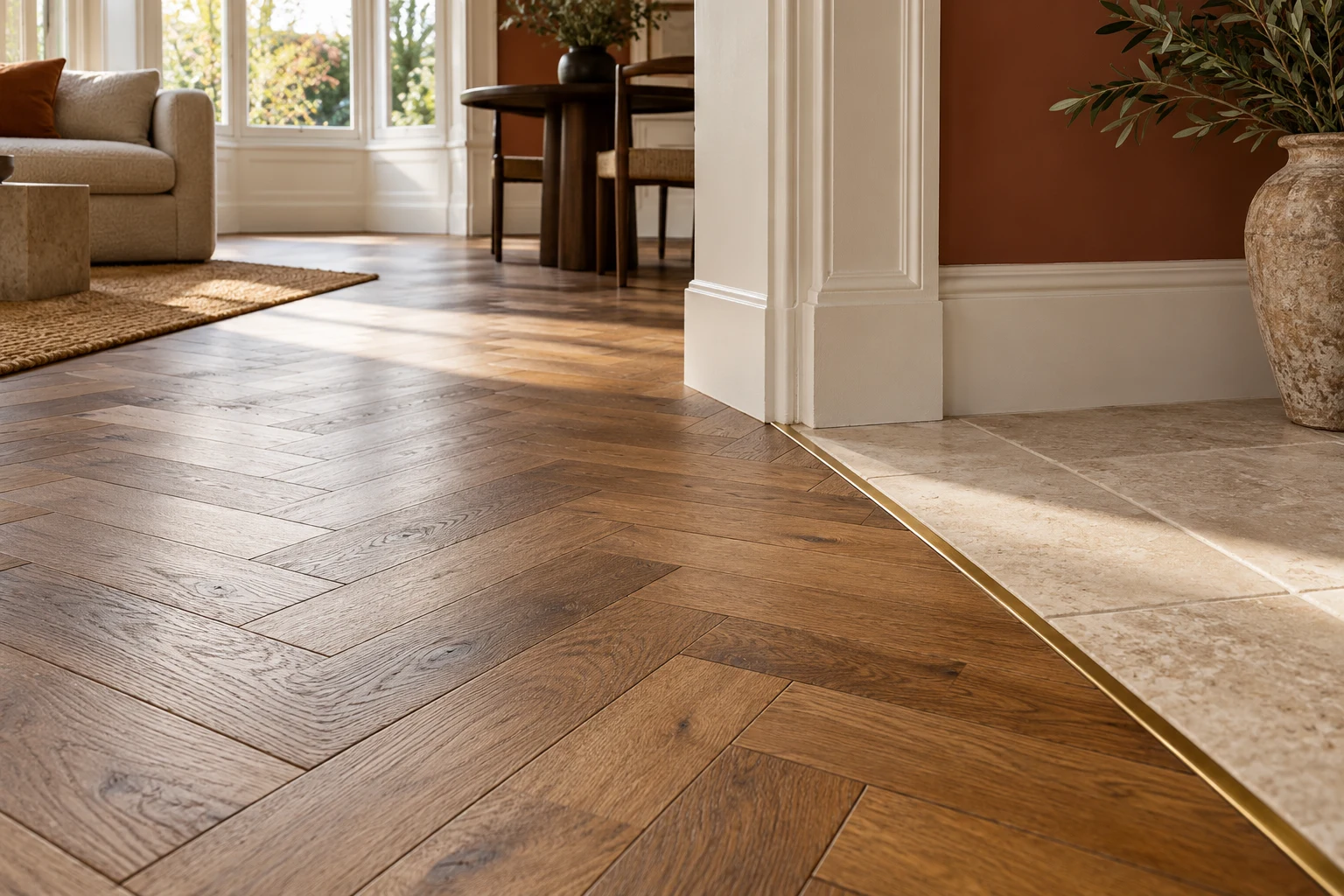
Questions before the floor is ordered.
Does one damaged board mean the whole floor must go?
Not automatically. Assess the floor construction, cause and extent of damage before comparing local repair, refinishing or replacement.
Can a patch be guaranteed invisible?
That should not be assumed. Age, grain, coating and available material can affect the match. Agree the intended result before ordering.
Is an old spare board enough to plan the repair?
It is useful information, but compatibility, condition and installation access still need assessment. The spare does not establish the method by itself.
Can engineered wood be sanded again?
Check its construction, remaining wearing material and permitted treatment. Products vary and should not be treated as one universal refinishing specification.
Will levelling compound stop a moving board?
The cause and substrate need assessment first. A compound must suit the base and system; it is not a general substitute for necessary timber repair.
What if water caused the damage?
Address the cause and relevant readiness before reinstatement. New flooring should not cover an unresolved condition.
Should the entire room be refinished for a patch?
Discuss it as a separate appearance option. The appropriate repair and desired visual continuity are related but different decisions.
What should I retain after repair?
Keep replacement and finish references, relevant guidance and any useful spare material stored as instructed. These support informed later maintenance.
Another floor needing assessment?
Discuss the construction and condition of each property through the main service rather than assume the same repair suits every room.
Show the defect and the floor around it.
Arrange a Blackheath survey and no-obligation quotation with the repair location and any available material information.