
RIGHT BUILD GROUP · GREENWICH
Bathroom Refurbishment in Greenwich
The right shower begins with the supply, not the size of the head. Review product requirements and everyday water use before fixing your Greenwich bathroom specification.
- Shower requirements reviewed
- Supply and layout considered
- Connected fitting decisions
A ROOM YOU USE EVERY DAY
Describe the shower you have before selecting the next one
Perhaps the existing shower disappoints when another outlet is used, or you want a different combination of overhead and hand-held outlets. Start with those observations rather than assuming a larger fitting will provide the experience you want. The selected products need to suit the actual water arrangement.
Right Build Group offers bathroom refurbishment in Greenwich, including plumbing, shower installation, preparation and finishing. At the survey, share the existing system information you know and proposed product specifications. A shower change can then be assessed as an installation rather than a decorative replacement chosen from a photograph.
CHOOSE THE RIGHT SCOPE
Compare shower choices against the installation
Replace the shower within its existing area
Keeping the position may limit alterations, but the new valve and outlets still have requirements. Review the concealed parts and connections before selecting the visible trim. A product described as a replacement may not use the same preparation or fixing arrangement as the existing fitting.
Change the way the shower operates
An additional outlet or different controls may be useful, but first assess the supply and proposed product combination. Explain which outlets you expect to use together. Do not assume a larger head or a more complex valve creates a suitable supply where the existing arrangement has not been reviewed.
Refit the bathing area and shower together
A wider room project can reconsider the shower position, enclosure or bath arrangement alongside the services. Discuss the reason for changing it and compare feasible options. The new layout should follow the assessed supply, waste and construction rather than depend on an unconfirmed product assumption.
LAYOUT BEFORE FINISHES
Ask what the whole product combination needs
Keep the valve, outlets and controls together in the specification. A retailer may display them as a coordinated design while their installation details remain separate documents. Share those documents before purchasing so the requirements can be reviewed as a complete proposal.
Explain ordinary simultaneous use elsewhere in the home. A shower assessed without that information may not address the situation that prompted the enquiry. Your observations are a useful starting point, but avoid attempting alterations or improvised tests yourself to prove a suspected cause.
Controls and maintenance access belong with the supply discussion. A concealed valve needs a considered installation behind the finished surface. Decide its practical position with the enclosure and user, while asking how relevant parts remain maintainable rather than assuming a seamless wall is the only acceptable finish.
WHAT HAPPENS, AND WHEN
Check the shower before committing the rest of the room
Product compatibility and room layout need to progress together. These checkpoints identify useful decisions without prescribing a supply solution or treating every shower change as the same installation.
| Stage | What happens | Your decision point |
|---|---|---|
| Describe current performance | Review the existing shower and the household water-use information. | Explain what disappoints and what you expect from the replacement. |
| Review proposed products | Assess valve, outlets and controls against the actual arrangement. | Confirm the complete combination before relying on a catalogue appearance. |
| Assess concealed work | Review connections, waste and backgrounds during the agreed preparation. | Agree findings or changes before new surfaces cover them. |
| Coordinate the room | Complete specified services, wet-area protection, tiling and fitting. | Keep product substitutions consistent with the assessed installation. |
| Review operation and care | Check the selected fittings, access and maintenance information. | Understand the installed arrangement rather than assuming every control works alike. |
THE TECHNICAL DETAILS
A shower needs a sound installation behind it
Assess the complete shower supply and waste
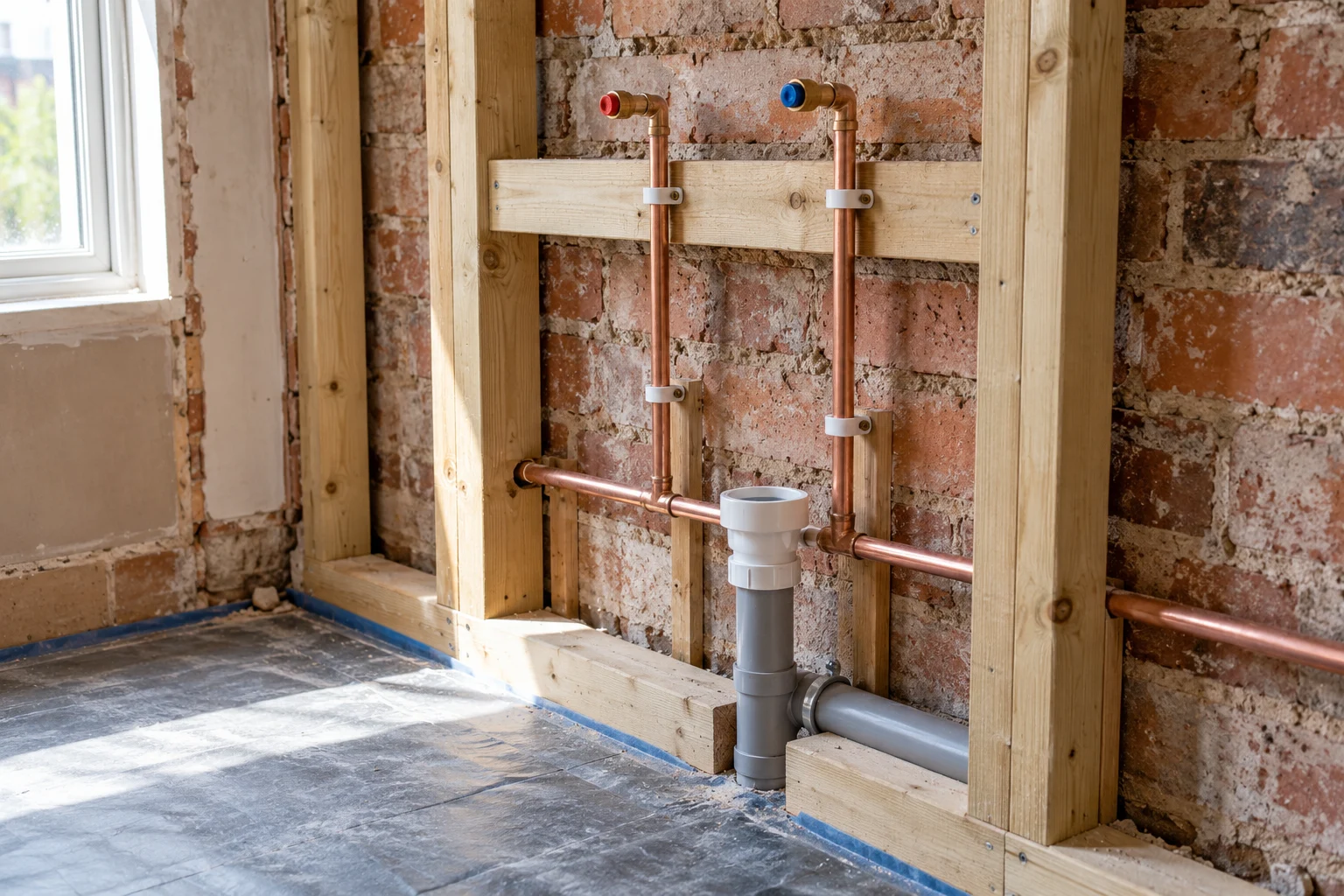
The existing hot-water arrangement and available supply need to suit the valve and selected outlets. Tell us how you expect to use them and which other fittings commonly run at the same time. Product information needs review before assuming the visible shower style will deliver the result you want.
The waste arrangement also needs to suit the proposed installation and room. If the shower area changes, review its floor and drain position alongside supply work. Agree how relevant connections and concealed parts remain reachable after the finishes and any new boxing are complete.
Treat the wet area as a complete system
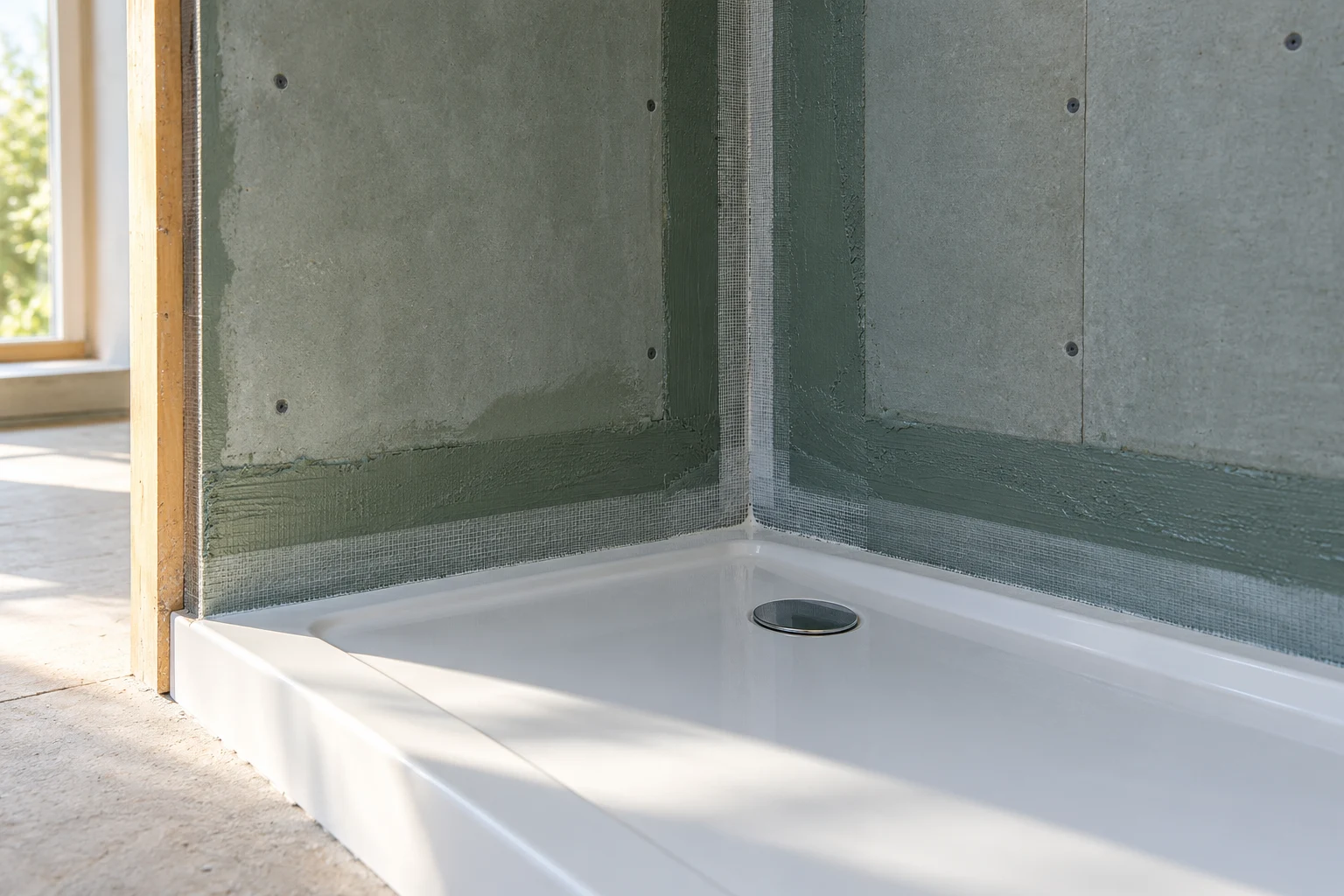
The tray or drain, surrounding walls and floor junctions need a coordinated waterproofing specification. Tiles and ordinary grout do not establish that protection on their own. Ask which areas are included and how the selected system relates to the proposed shower arrangement.
If opening up reveals staining or damaged material, the cause and repair should be considered before new finishes conceal it. Preparation and any drying or curing follow the requirements of the chosen products. This is not a stage to shorten simply because the screen has arrived.
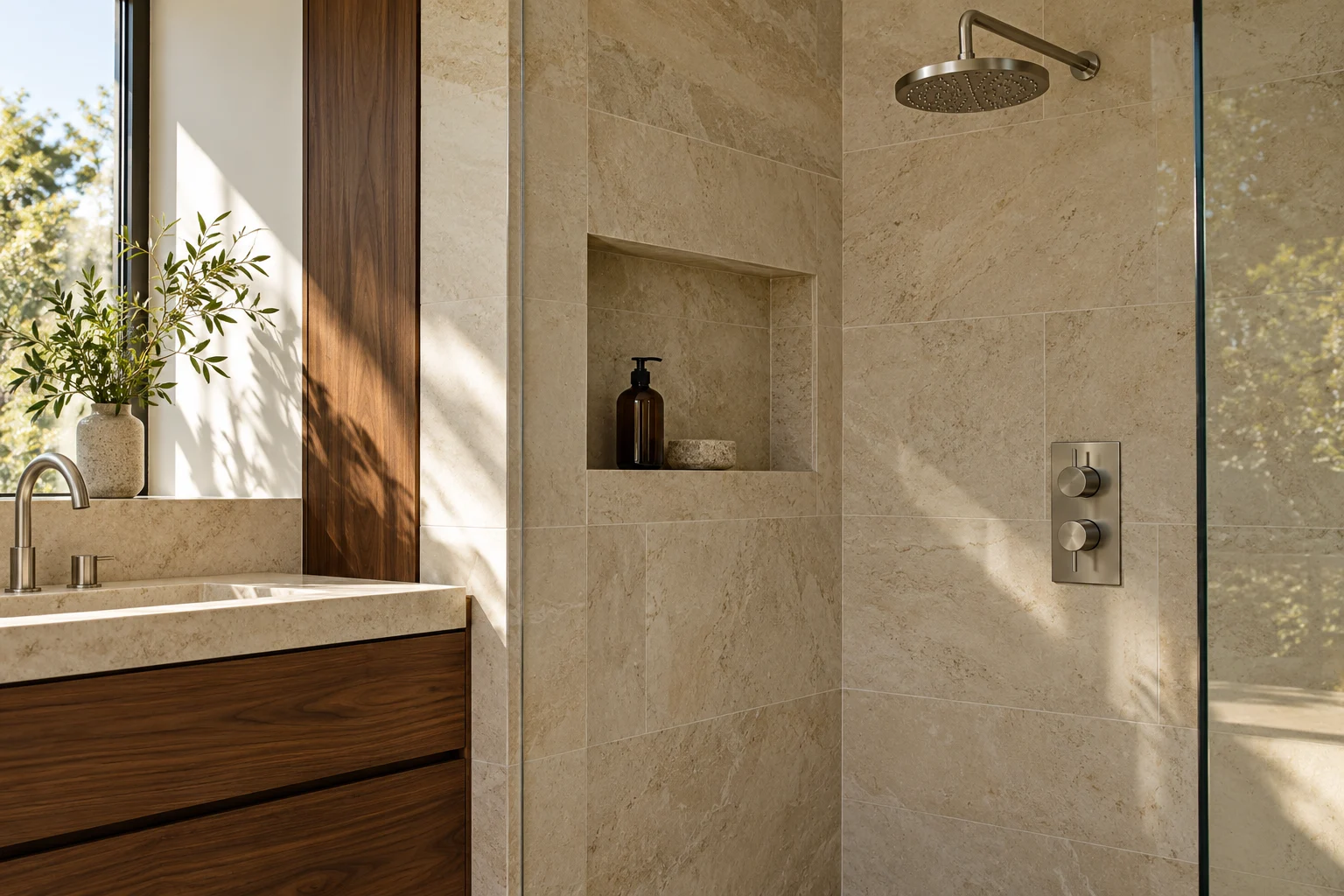
Set out the tiles around the real fittings
Consider the tile layout alongside the shower valve, recesses and screen fixings. Visible cuts and changes of material need decisions before fixing starts. A product photograph may show a generous room that gives little indication of how the same format will meet your existing corners.
Choose a floor finish intended for the proposed wet environment, and discuss care as well as colour. The area outside the screen needs consideration too. Ask where water is expected to land and how the shower floor or tray meets the dry part of the bathroom.
AIR, LIGHT & EVERYDAY COMFORT
A different shower still needs a suitable room
Discuss how frequently the shower is used and any condensation history before ceilings or boxing are finished. The extraction route needs assessment alongside the refit. A shower with different outlets is not a reason to assume the existing ventilation arrangement has been reviewed merely because the fan still operates.
Electrical products and controls need appropriate specification and positioning for the bathroom installation. Share intended mirrors, rails and lighting early, with the appropriate electrician assessing suitability. Keep their requirements with the shower proposal so an added accessory does not force a late change to finished surfaces.
PLANNING THE WORK IN GREENWICH
Prepare the water-use brief for your Greenwich survey
Before the visit, note when shower performance disappoints and whether another outlet is in use at the time. Include the existing shower, taps and hot-water arrangement if you know their details. These observations help explain the problem without requiring you to carry out tests or adjustments.
Keep the specifications of proposed valves and outlets together. If a retailer has suggested an alternative, share that information before purchasing. A change of product should be reviewed against the actual supply rather than accepted simply because the visible trim is similar.
If access to shared services or a building contact is needed, establish who can provide the relevant information. Keep that practical arrangement with the room brief so supply assessment does not depend on an inaccessible point or an unanswered question when work is scheduled.
WORKING WITH RIGHT BUILD GROUP
Connect the product order to the surveyed supply
Describe use and expectations
Send photographs and the current shower details you have. Explain simultaneous outlet use and what you want the replacement to improve.
Review compatibility at the survey
Discuss the available system information and proposed products. Agree the installation scope, supply responsibilities and any questions that need resolution before ordering.
Keep changes within the assessed proposal
Confirm valves, outlets and controls together. If a product changes or removal exposes a repair, review its effect before services and surfaces are closed.
Learn the installed arrangement
At handover, review operation, access and care information. Keep the exact product references for maintenance instead of relying on a retailer’s original display name.
BUILDING A USEFUL QUOTATION
Separate the shower purchase from its installation
A product price does not establish the work needed to connect it appropriately. The existing supply, concealed valve arrangement, access and affected surfaces can influence the proposal independently of the visible fitting. Compare assessed installations, not just shower-head prices.
Keeping a position can reduce some alterations, but the condition and suitability of existing connections still need review. Clarify wet-area preparation, making good and any changes to the enclosure or surrounding finish. Ask how additional findings will be agreed if they become visible during removal.
Check availability of the full valve, outlet and control combination before agreeing the installation dates. If a component changes, have its requirements reviewed before the replacement is ordered. Keep the product schedule and the quoted service work aligned, including any making good around a changed concealed part. This makes the final purchasing decision a comparison of a complete installable set rather than separate prices for the most visible pieces.
BEFORE YOU COMMIT
Questions worth asking.
Will a larger shower head improve the water delivery?
Not by itself. Its requirements need to suit the actual supply and installation. Describe the current issue and have the proposed valve and outlets assessed together before purchasing a larger fitting.
Should I mention other outlets used during a shower?
Yes. Explain ordinary simultaneous use and what you notice. That information helps frame the assessment without asking you to diagnose the system or carry out alterations yourself.
Can I buy the valve and trim separately?
Check the complete compatible product requirements and supply responsibility before ordering. A coordinated appearance does not establish that unrelated concealed and visible parts form a suitable installation.
Does keeping the shower position mean no preparation is needed?
No. Connections, fixings and surrounding backgrounds still need review. The replacement may differ from the existing product, and new work needs a defined relationship with retained finishes.
Can a different product be substituted after the survey?
Share the full replacement specification first. Similar appearance does not confirm the same supply, fixing or access requirements. Review the effect before connected work relies on the change.
What information should I keep for future servicing?
Retain the exact installed valve, outlet and control references, their care information and agreed maintenance access details. Those records are more useful than a generic description such as rainfall shower.
BATHROOM SERVICES BEYOND GREENWICH
Considering work at another property?
Explore our bathroom services in Blackheath, Bromley and Dulwich, or see the main service page for the wider installation scope.
LET’S PLAN YOUR BATHROOM
Start with the shower requirements
Arrange a Greenwich survey and no-obligation quotation with Right Build Group. Bring existing system information, room photographs and product ideas so the installation can be assessed before purchase.